Addition
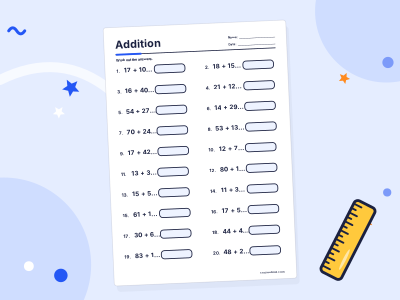
Addition is putting amounts together to find a total. The sign is +, and the answer is called the sum or total, so 4 + 3 = 7.
Maths · Ages 7–8 · 50 minutes
Children add two-digit numbers using the column method, lining up digits by place value and exchanging ten ones for one ten.
Generated fresh each time you press a button, and marked instantly on screen.
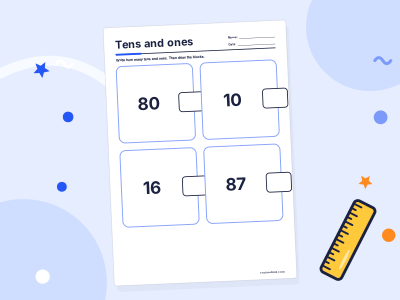
Quick place-value check on whiteboards: "How many tens and ones in 47? In 60? In 18?" Then two mental additions: 30 + 40, and 6 + 7. Ask, "What's special about 6 + 7?" (It makes more than ten.)
Write 34 + 25. "First, estimate. About 30 + 25, so a bit more than 55." Build both numbers with blocks on a place-value mat, tens on the left, ones on the right.
"Column addition: write the numbers one under the other, tens under tens and ones under ones. Then add the ones first." Write it out on squared paper, one digit per square.
"4 ones and 5 ones make 9 ones. 3 tens and 2 tens make 5 tens. 59." Compare with the estimate: close, so sensible.
Now one with an exchange: 47 + 28. Build it. "7 ones and 8 ones make 15 ones. That's more than 9, so it won't fit in one column. I exchange ten ones for one ten." Swap ten ones cubes for a tens rod. "Now I have 5 ones, and one extra ten. I write the 5 in the ones column and the extra 1 under the line in the tens column."
"Tens: 4 + 2 + the 1 I exchanged = 7 tens. 75."
Step by step