Alphabet
The alphabet is the set of 26 letters we use to write English, from a to z, each with a name, a sound and a capital and lowercase shape.
English · Ages 5–6 · 45 minutes
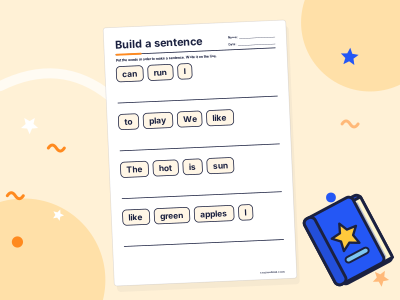
Children write a simple sentence that starts with a capital letter and ends with a full stop, and use a capital letter for I and for names.
Generated fresh each time you press a button, and marked instantly on screen.
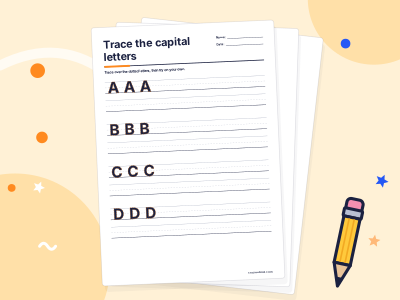
Capital match: give out lower-case letter cards and capital letter cards. Children find their partner (a finds A). Ask, "Which pairs look nearly the same?" (c/C, s/S, o/O). "Which look completely different?" (a/A, r/R). Children need to know both forms before they can choose the right one.
Hold a sentence: say, "The cat sat on the mat." Children repeat it, then count the words on their fingers. Six words.
"A sentence is a complete idea. It makes sense on its own."
Write on the board, with no capital and no full stop: the dog ran to the park
"Puppet wrote this. Something is missing. A sentence is like a sandwich. It needs a slice at the start and a slice at the end, or the filling falls out."
Change t to T. "Sentences start with a capital letter, a big, tall letter that says start here."
Add a full stop. "And they end with a full stop. It tells the reader to stop and take a breath."
Read it aloud with an exaggerated pause at the full stop. Then show two sentences run together, I like apples my sister likes pears, and read it without a pause. Children will hear that it's confusing. Fix it together.
Now add the special capitals:
"I is always a capital when it means me. And names always get a capital, because names are important. Sam. Lagos. Monday."
Step by step