Halloween Learning Activities for Kids: Maths, Literacy and Art
Friendly, not-too-scary Halloween maths, literacy, art and science activities for ages 3–11, with a week plan and autumn swaps for families who don't celebrate.
On this page
Halloween gives you a week when children will happily count sweets, write monster descriptions and measure pumpkins without anyone mentioning the word "lesson". The theme does the motivating. This guide has friendly (not frightening) maths, literacy, art and science activities for ages 3–11, a ready-made week plan, and autumn swaps for families and classrooms that don't celebrate Halloween.
First, a note on including everyone
Not every family celebrates Halloween. Some avoid it for religious or cultural reasons, some find it frightening, and in many countries it simply isn't part of local tradition. In a classroom, you'll often have a mix.
A simple approach works well: make every activity work with an autumn or harvest theme too. Counting acorns works as well as counting sweets. A friendly owl is as good to draw as a witch. A "harvest soup" recipe teaches the same fractions as a "potion".
- Offer the alternative as a normal option, not a special one: "You can draw a bat or an owl."
- Don't ask children to explain why they're choosing the autumn version.
- Keep displays mixed, so every child's work fits.
Our autumn activities are designed for exactly this, and sit happily alongside the Halloween activities in the same week.
 owl
owl moon
moon web
web candle
 mushroom
 fox
fox
Maths: counting, measuring and potion recipes
Ages 3–5: the counting cauldron. Put a bowl or pot on the table (the cauldron) and a pile of small objects: buttons, pasta shapes, conkers or wrapped sweets. Roll a die and count that many into the cauldron, touching each one as you count. For a challenge: "There are 5 in the cauldron. I'll add 2 more. How many now?"
Sorting. Sort a pile of mixed sweets or autumn objects by colour, size or shape, then count each group. "Which pile has the most? Which has the fewest?" That's early data handling.
Ages 5–7: measure a pumpkin. Give each child a piece of string and ask them to guess how much string would go round the pumpkin's middle. Cut their guess, then test it. Was the string too long, too short, or nearly right? Then compare: "Is the pumpkin taller or wider?"
Ages 7–9: spooky shop. Price small items (5p, 10p, 20p, or the cents equivalent) and give children a budget. "You have 50p. Can you buy a bat sticker for 15p, a pumpkin pencil for 20p and a spider ring for 10p? How much change?" (Yes, with 5p change.)
Ages 8–11: potion recipe scaling. Write a silly recipe for 4 people:
- 200 ml of swamp juice (apple juice)
- 3 frog eyes (grapes)
- 50 g of bat wings (crisps)
Now ask: "How much do you need for 8 people? For 6? For 2?" For 6 people, it's 300 ml, 4½ frog eyes and 75 g of bat wings, and the half-grape usually causes a lively discussion. Making the potion afterwards is optional but popular.
Costume tally chart. At a class party or a family gathering, tally costumes or favourite autumn foods, then turn the tally into a bar chart. Older children can work out fractions: "What fraction of the class dressed as animals?"
For number practice pages, the counting worksheets work for the youngest, and many of them already have autumn themes.
Literacy: spooky (not scary) words and stories
Letter-sound hunt (ages 3–6). Pick a sound and hunt for Halloween or autumn words that start with it: /b/ for bat, broom, bone; /p/ for pumpkin, potion; /w/ for web, witch, wind. Children draw one thing for each word and write or trace the first letter.
Monster descriptions (ages 6–9). Draw a monster, then describe it with adjectives. Push past "big" and "scary" with a word bank: hairy, lumpy, slimy, enormous, tiny, spotty, three-eyed, friendly, grumpy. Then a challenge: describe it so well that a partner can draw it without seeing yours. Comparing the two drawings is very funny and teaches precise writing.
Instructions: how to carve a pumpkin (ages 7–11). Procedural writing with a real purpose. Children write numbered steps with bossy verbs: Cut the top off. Scoop out the seeds. Draw a face. Then an adult follows the instructions exactly as written, which shows quickly when a step is missing.
Acrostic poems. Write OWL, BAT or AUTUMN down the side of a page and write a line for each letter.
A friendly story. For the youngest, read The Too-Big Pumpkin, then ask: "What would you do with a pumpkin that big?" For older children, use a story starter: "The pumpkin on the doorstep was smiling, and it hadn't been carved…" Give them a twist rule: the story must have a happy ending.
Art and fine motor activities
Draw a monster. Step-by-step drawing builds careful looking and pencil control, and monsters forgive every wobble.

Paper-plate spider web (ages 3–6). Punch holes round the edge of a paper plate and let children thread wool or string across it to make a web. It's excellent fine motor practice. Our post on fine motor activities has more threading and cutting ideas.
Leaf creatures. Collect autumn leaves and turn them into bats, owls or monsters with googly eyes and a few pen marks.
Colour an owl. Owls suit both Halloween and autumn displays, and the line art is simple enough for preschoolers.

Pumpkin faces. Before anyone carves, children design pumpkin faces on paper. Give them a printed pumpkin outline, and ask for three different expressions: happy, surprised and sleepy. It's a neat link to talking about feelings.
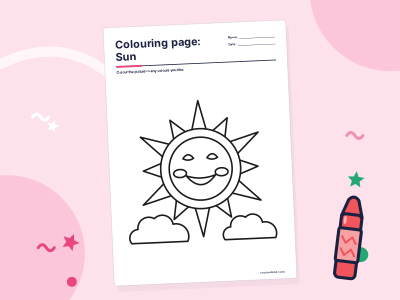
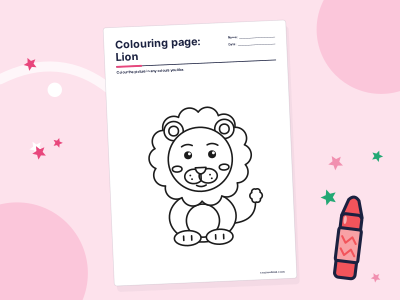
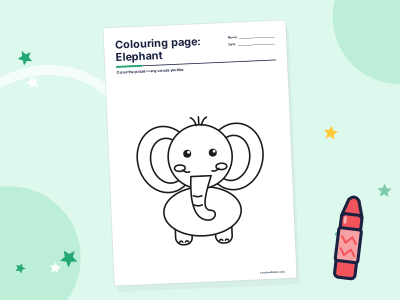
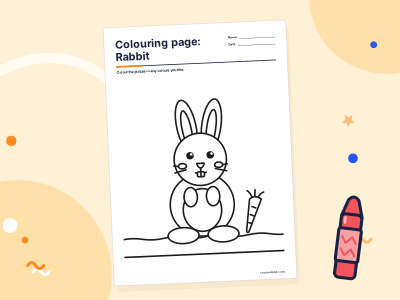
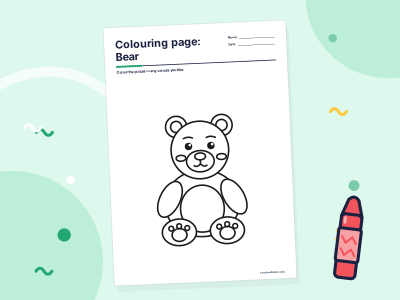
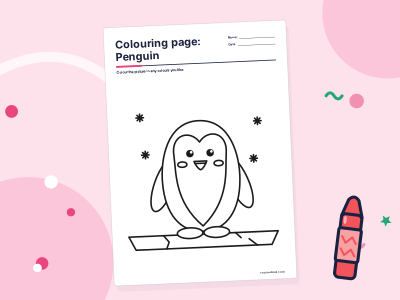
Halloween and autumn colouring pages
Science for curious minds
Pumpkin investigation. Before you scoop out a pumpkin, ask children to estimate how many seeds are inside. Then count them in groups of ten. Medium pumpkins often have hundreds, and the counting-in-tens method makes it manageable. Older children can compare two pumpkins of different sizes: does the bigger one have more seeds?
Does a pumpkin float? Ask children to predict, then test it in a bath or big tub. Most pumpkins float, despite being heavy, because they're hollow and full of air. That's a lovely first conversation about why some heavy things float.
Dancing ghosts. Cut small ghost shapes from tissue paper. Rub a balloon on a jumper or hair, then hold it just above the ghosts and watch them jump up. That's static electricity, and children will want to do it twenty times.
Night animals. Owls, bats, foxes and hedgehogs are all active at night. Talk about why some animals are nocturnal (less competition, fewer predators, cooler temperatures in hot places), and draw a "night-time" and a "day-time" animal side by side.

Quiet puzzles for party-day nerves
Halloween week can tip children over the edge: costumes, parties, sugar and late nights. Calm, independent activities help bring the energy down, especially on the day itself.
Word searches. A short list of themed words (bat, owl, moon, web, leaf, pumpkin) gives younger readers a satisfying challenge, and older children can make their own grid for a partner to solve.
Mazes. "Help the cat get home before midnight" is the same maze as any other, with a better story. Mazes build planning and pencil control, and a child who's had too much excitement often finds them soothing.
Spot the difference. Two autumn forest scenes with eight differences make children slow down and look carefully, which is the opposite of how they've been behaving all afternoon.
Spooky code-breakers (ages 7–11). Write a short message in a simple code where each letter is replaced by the next one in the alphabet (A becomes B, B becomes C). "UIF PXM JT IFSF" decodes to "THE OWL IS HERE". Children can then write their own coded messages for a friend.
Missing letters. B_T, W_B, M_ _N for the youngest; PUMPK_N, SKEL_TON, CAUL_RON for older spellers.
Keep a few of these printed and ready. When the room gets loud, handing out a puzzle is often quicker than asking for quiet.
A Halloween learning week
If you want a ready plan, here's a week with one short activity per day. Each takes 20–40 minutes.
| Day | Activity | Main skill |
|---|---|---|
| Monday | Counting cauldron or spooky shop | Counting, money |
| Tuesday | Monster drawing and description | Adjectives, description |
| Wednesday | Pumpkin investigation: measure, float, count seeds | Measuring, estimating, science |
| Thursday | Write pumpkin-carving instructions | Procedural writing |
| Friday | Potion recipe and tally chart party | Scaling, data |
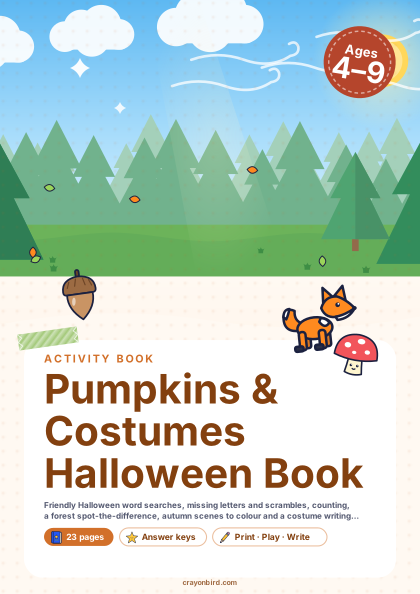
Swap any activity for its autumn version as needed. For a printed set covering several of these days, the Pumpkins & Costumes Halloween Book has word searches, missing letters, counting, a forest spot-the-difference and autumn scenes to colour.
Activity bookAges 4–9
Pumpkins & Costumes Halloween Book
Friendly Halloween word searches, missing letters and scrambles, counting, a forest spot-the-difference, autumn scenes to colour and a costume writing page.
See what’s insideKeeping it safe and comfortable
- Masks and fears. Young children can find masks and costumes genuinely frightening, even on people they know. Let them watch from a distance and keep faces visible when you can.
- Food and allergies. In classrooms, check allergies before any food activity, and consider non-food treats such as stickers or pencils.
- Candles. Use battery tea lights in pumpkins, especially anywhere near children or costumes.
- Carving. Adults do the cutting. Children can draw the face, scoop the seeds and push in the battery light.
This week, pick one activity from each section and try them on consecutive days. The counting cauldron and the monster drawing are the easiest places to start, and both work just as well with an autumn theme.
Common questions
What are good Halloween learning activities for preschoolers?
Counting small objects into a "cauldron", sorting by colour, letter-sound hunts (b for bat, p for pumpkin), threading a paper-plate spider web and simple colouring. Keep it friendly, short and hands-on.
How can I include children who don't celebrate Halloween?
Offer an autumn or harvest version of the same activity, such as counting acorns instead of sweets or drawing an owl instead of a witch. Make the alternative feel just as fun, and avoid singling any child out.
Are Halloween activities too scary for young children?
They don't have to be. Choose friendly themes like smiling pumpkins, owls, bats and silly monsters, avoid masks and gory images with little ones, and let children opt out of anything that worries them.
Printables used in this article
Crayonbird Editorial Team
Writers, illustrators and educators
We are the small team that writes, draws and tests Crayonbird’s activities. We try every idea with our own printables, keep advice practical and honest about what doesn’t work, and point to official guidance where it matters. Nothing on this blog is sponsored.
Related articles
Seasons and festivals
Christmas Learning Activities for Kids: Maths, Writing, Art and Kindness
Festive maths, letter writing, art and kindness activities for ages 3–11, plus winter swaps and ideas for families who celebrate differently or not at all.
Ages 3–117 min read
Art and creativity
How to Teach a Child to Draw: Simple Steps for Ages 4–10
How to teach a child to draw with simple shapes and step-by-step lessons, what to say when they get stuck, and why drawing it for them backfires.
Ages 4–108 min read
Seasons and festivals
Summer Learning Without the Battle: A Light Plan for the Holidays
What the research on the summer slide really says, plus a 20-minute routine, reading ideas, real-world maths and travel journals for children aged 4–11.
Ages 4–118 min read