Christmas Learning Activities for Kids: Maths, Writing, Art and Kindness
Festive maths, letter writing, art and kindness activities for ages 3–11, plus winter swaps and ideas for families who celebrate differently or not at all.
On this page
December is busy, noisy and very hard to teach through, so it helps to let the season do some of the work. These activities take the excitement children already have and point it at counting, writing, symmetry and kindness. Each one has a winter alternative, because not every child celebrates Christmas, and in half the world December is the middle of summer.
Including everyone
Children in the same class may celebrate Christmas, Hanukkah, other festivals, or nothing at all in December. Others will be celebrating Christmas on a beach in Sydney or Rio de Janeiro, where snowmen are as exotic as camels.
A few easy habits help:
- Offer a winter or neutral version of each activity: snowflakes, stars, thank-you cards and kindness work for everyone.
- Invite other celebrations in. A child who marks Hanukkah might enjoy the Hanukkah activity book, and counting eight candles is just as good maths as counting baubles.
- Don't make anyone explain. "You can make a Christmas card or a winter card" is enough.
Our winter activities sit happily alongside the Christmas activities, so mixed classrooms and families can share the same week.
 star
star gift
gift snowman
 bell
bell candle
 snow
snow
Maths: countdowns, songs and wrapping paper
Advent number line (ages 3–6). Draw a number line from 24 down to 1 and cross off a number each day. Ask: "How many days left? How many have we crossed off?" Counting backwards is harder than counting forwards, and a daily countdown makes it routine. Children aged 6–8 can add a daily question to the line: "It's the 9th. How many days until the 24th?" (15), or "How many days of December have gone so far?" Writing the answer on a sticky note each morning turns the countdown into a running maths warm-up for the whole month.
Bauble sorting (ages 3–5). Sort baubles, buttons or pom-poms by colour or size, then count each group. "Are there more red or more gold?"
The twelve days of Christmas (ages 7–11). If you received every gift in the song, how many would you get altogether? On day 1 there's 1 gift, on day 2 there are 3 (two doves and a partridge), on day 3 there are 6… Children can build the table, spot the pattern (these are triangular numbers) and add them up. The answer is 364, which is one fewer than the number of days in a year, a fact children love. Our number pattern worksheets follow on nicely.
Wrapping maths (ages 8–11). Give children a box and a roll of paper. Estimate how much paper is needed, then measure the faces and work it out. It's a hands-on introduction to surface area, and the wrapping at the end tests whether the maths was right.
Gift budget. "You have 10 pounds (or dollars) to buy presents for four people. Plan what you'd buy from this price list." Real decisions make the subtraction matter.
Writing: letters, lists and riddles
Thank-you letters (ages 5–11). The most useful December writing task there is. Teach the shape: a greeting, what you're thanking them for, why you liked it, a question for them, and a sign-off. Younger children can draw the gift and write one sentence. The story Letters for Mr Virtanen (ages 8–11) is a lovely way into letter writing.
Present riddles (ages 6–9). Children describe a gift without naming it: "It's round, it bounces, and you kick it." Partners guess. This is great practice for precise adjectives and for thinking about the reader.
Lists with a twist. A wish list where every item needs two adjectives: a fluffy, purple scarf. Older children can write "five gifts that money can't buy".
Story starter. "The snowman woke up at midnight and found the garden was empty…" Ask for a beginning, a problem and a happy ending.
Art: snowflakes, cards and drawing
Paper snowflakes. Fold a square of paper into a triangle, then again, and cut small shapes from the edges. Unfold to reveal a symmetrical snowflake. It's an easy way into talking about symmetry: "What do you notice about both sides?" Children aged 3–4 will need help with the folding and scissors.
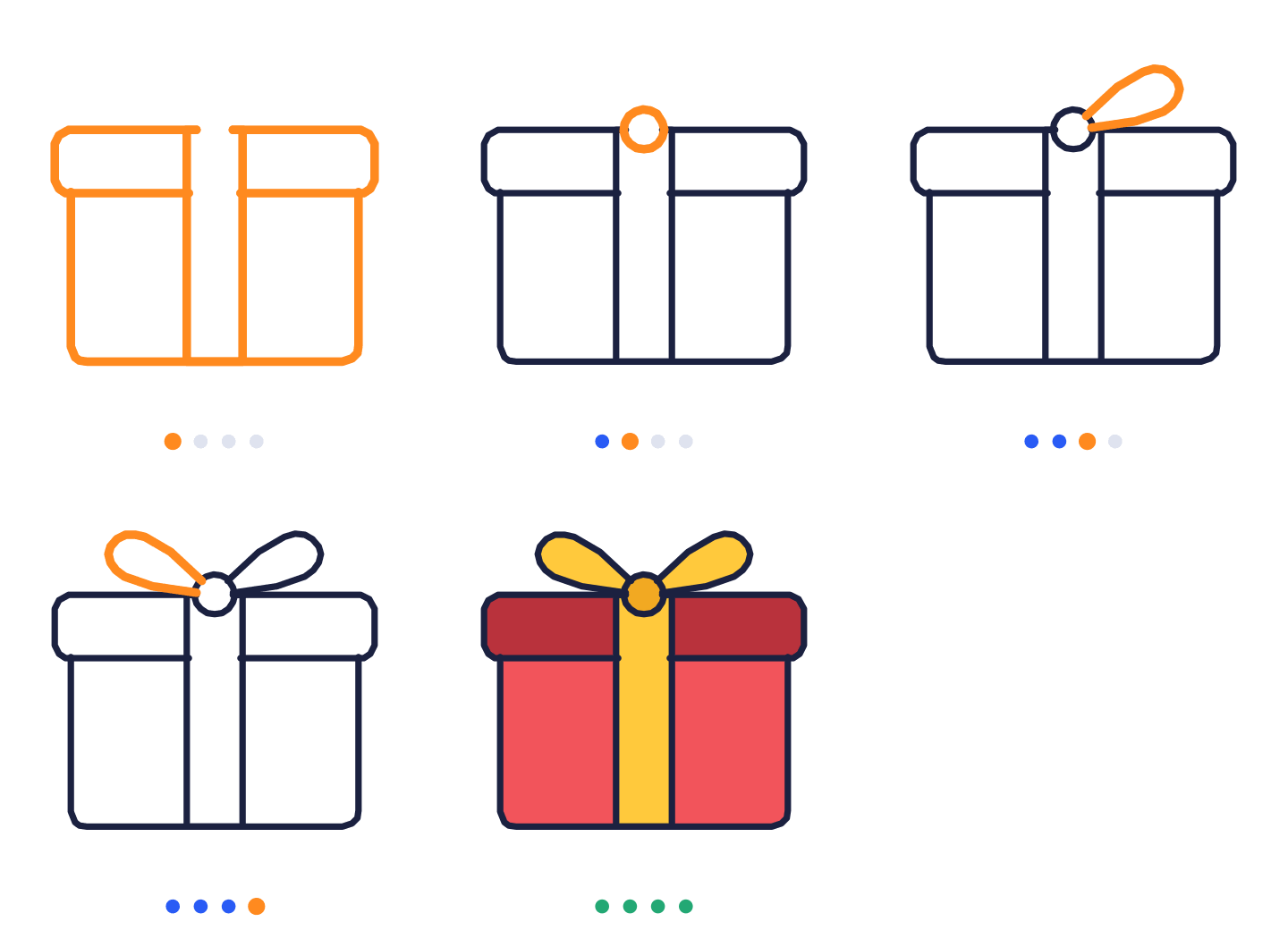
Draw a gift. Step-by-step drawing lessons are calming in a hectic month.
Colour a snowman. Works for Christmas and winter displays alike.

Home-made cards. Fold card in half, then draw, colour, stick or print. Our post on how to teach a child to draw has tips for helping children who say "I can't draw".
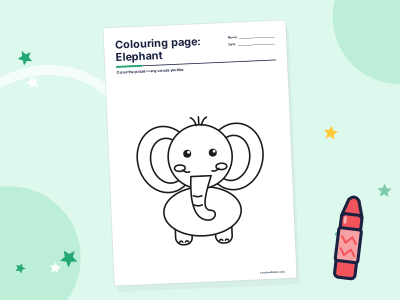
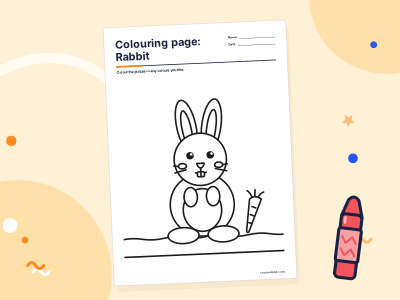
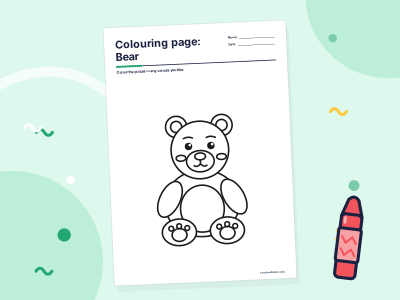
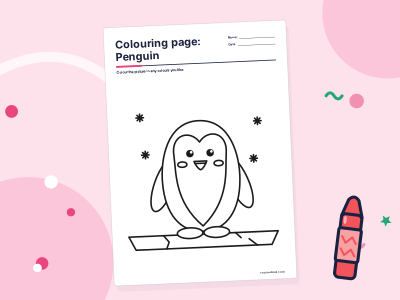
Winter colouring pages for cards and displays
Science: winter investigations
Winter is full of small experiments, and most need nothing more than ice, water and a few things from the kitchen drawer.
Which ice melts first? (ages 4–8). Put ice cubes in different places: a windowsill, a fridge shelf, a warm room, a sunny spot. Children predict which will melt first, then check every ten minutes. Older children can time it and record the results in a table.
Keep the ice cube cold (ages 7–11). Wrap ice cubes in different materials, such as foil, a sock, newspaper, bubble wrap and nothing at all, and see which lasts longest. It's a good introduction to insulation, and leads naturally to "Why do we wear woolly hats?" and "How do animals in cold places stay warm?"
Why do snowflakes have six sides? After cutting paper snowflakes, ask children whether real ones look the same. Real snowflakes nearly always have six arms or sides, because of the way water molecules fit together when they freeze. For children in hot places, frost on a freezer tray or ice from the fridge works as a starting point.
Salt and ice. Sprinkle salt on half an ice cube and leave the other half plain. Which melts faster? Salt lowers the freezing point of water, which is why salt is spread on icy roads in cold countries.
Calm activities for the last week of term
The final days before a holiday are the hardest to teach. Children are tired, excited and often out of routine, and adults are too. Quiet, independent tasks help everyone.
- Winter word searches and mazes for independent work at tables.
- A class reading afternoon with blankets, cushions and a pile of winter books.
- Drawing lessons done one step at a time on the board.
- Card-making for family, friends or school staff, which doubles as writing practice.
- Reflection pages: "Three things I learnt this term" and "One thing I'm proud of".
None of these is wasted time. They practise reading, writing, fine motor skills and concentration, without asking a tired class to take in anything brand new.
Kindness activities
December is a natural time to talk about thinking of others, and these activities work for any family.
Kindness advent calendar. Instead of a treat each day, write a small act of kindness on each door or envelope. Some ideas:
- Make a card for a neighbour.
- Help cook dinner.
- Write a thank-you note to someone at school, such as the cook or caretaker.
- Choose a toy or book to give away.
- Phone or video-call a grandparent.
- Draw a picture for someone who is ill or lonely.
- Tidy a room without being asked.
- Make a bird feeder for the garden.
Kindness chain. Each time a child does something kind, they write it on a strip of paper and add it to a paper chain. Watching the chain grow across the classroom or hallway is surprisingly motivating.
Thank-you cards for helpers. In school, children make cards for the staff who don't usually get one. It combines writing, art and kindness in one task.
Kindness calendar supplies
- 24 small envelopes or paper squares
- A list of kind acts suited to your child's age
- A ribbon or board to hang them on
- Card and pens for the many card-making days
A quick December plan
| Week | Maths | Writing | Art and kindness |
|---|---|---|---|
| Week 1 | Advent number line | Wish list with adjectives | Start the kindness chain |
| Week 2 | Twelve days pattern or bauble sorting | Present riddles | Paper snowflakes |
| Week 3 | Wrapping or gift budget maths | Thank-you letters | Home-made cards |
For a printable set that covers several of these, the Winter Holidays Activity Book has snowy word searches, cosy maths, mazes, thank-you cards and wintry colouring.
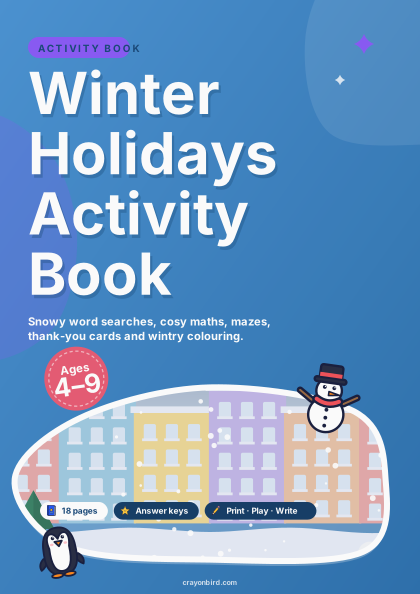
Activity bookAges 4–9
Snowy word searches, cosy maths, mazes, thank-you cards and wintry colouring.
See what’s insideStart this week with the advent number line and a kindness chain: both take five minutes to set up and run all month. Add the rest as the days allow.
Print Christmas and winter activities
Common questions
What are easy Christmas learning activities for preschoolers?
Counting down on an advent number line, sorting baubles or buttons by colour, cutting simple paper snowflakes with help, and colouring a snowman or a star. Keep each activity to ten or fifteen minutes.
How can I make Christmas activities inclusive in a classroom?
Offer a winter version of each activity, such as snowflakes, snowmen and thank-you cards, and include other celebrations children in the class mark. Let children choose without having to explain why.
What is a kindness advent calendar?
A countdown where each day has a small act of kindness instead of a treat, such as making a card for a neighbour or helping to cook dinner. It works for families of any faith or none.
Printables used in this article
Crayonbird Editorial Team
Writers, illustrators and educators
We are the small team that writes, draws and tests Crayonbird’s activities. We try every idea with our own printables, keep advice practical and honest about what doesn’t work, and point to official guidance where it matters. Nothing on this blog is sponsored.
Related articles
Seasons and festivals
Halloween Learning Activities for Kids: Maths, Literacy and Art
Friendly, not-too-scary Halloween maths, literacy, art and science activities for ages 3–11, with a week plan and autumn swaps for families who don't celebrate.
Ages 3–118 min read
Seasons and festivals
Summer Learning Without the Battle: A Light Plan for the Holidays
What the research on the summer slide really says, plus a 20-minute routine, reading ideas, real-world maths and travel journals for children aged 4–11.
Ages 4–118 min read
Art and creativity
The Real Benefits of Colouring for Children (and How to Get More from It)
What colouring genuinely does for children's hands, focus and calm, what it doesn't, and simple ways to turn a colouring page into a learning activity.
Ages 2–108 min read