English
What are silent letters, and how do you know when to use them?
Quick answer
Silent letters are letters you write but do not say, like the k in knee, the b in lamb and the w in write. Most of them follow patterns such as kn, wr, mb and gn.


In one sentence
A silent letter is a letter that is written in a word but not pronounced, like the k in knee or the b in lamb.
Explained
Say knee, lamb and write out loud. You hear "nee", "lam" and "rite". The k, the b and the w are there on the page, but your voice skips them. These are silent letters, and English has a lot of them.
Why keep a letter nobody says? Long ago, many of them were pronounced. In Old and Middle English people really did say the k in knight and knee and the w in write. Over the centuries the way people spoke changed, but the spelling stayed the same, especially once printing (from the late 1400s) helped to fix how words were written. Other silent letters were added on purpose: in the 1500s, scholars put a b into debt and doubt to show their Latin roots (debitum, dubitare), even though English speakers had never said it. Borrowed words often keep their original spelling too: ballet comes from French and psychology from Greek.
 castle
 scissors
 guitar
The good news is that silent letters are not random. Most of them come in letter patterns that you can learn as families:
- kn at the start of a word: the k is silent (knee, knock, know, knife, knight).
- wr at the start of a word: the w is silent (write, wrong, wrist, wrap).
- mb at the end of a word: the b is silent (lamb, comb, thumb, climb, and also plumber).
- gn: the g is silent (gnome, gnat, sign, design, foreign).
- mn at the end: the n is silent (autumn, column, solemn, hymn).
- st and sten: the t is often silent (castle, whistle, listen, fasten).
- alk, alf, ould: the l is silent (walk, talk, half, calf, could, should).
- gu: the u is silent (guess, guitar, guard, guide).
- sc: the c is silent (scissors, science, muscle, scene).
- igh: the gh is silent (night, light, high), and in daughter and though too.
- a silent h (hour, honest, ghost, rhyme) and a silent w (sword, answer, two, who).
Here is a helpful trick: a silent letter often "wakes up" in a related word. You cannot hear the g in sign, but you can in signature and signal. The n is silent in autumn and column but spoken in autumnal and columnist. The c is silent in muscle but you hear it in muscular. If you know the relative, you can spell the word.
Two more things to know. First, many teachers also call the e at the end of cake or bike a "silent e" (or "magic e"): you don't say it, but it changes the vowel sound before it. Second, some letters are silent in one accent and spoken in another. Most Americans say herb without the h, while most British speakers say the h; and some people pronounce the l in almond or the t in often. Letters that work together to make one sound are also covered on the digraphs page.
Examples
| Pattern | Silent letter | Example words | Clue |
|---|---|---|---|
| kn- | k | knee, knot, knight | at the start, before n |
| wr- | w | write, wreck, wrong | at the start, before r |
| -mb | b | lamb, thumb, crumb | at the end, after m |
| gn | g | gnome, sign, design | before n, at the start or end |
| -mn | n | autumn, column, hymn | at the end, after m |
| -stle, -sten | t | castle, listen, fasten | after s |
| -alk, -alf | l | walk, chalk, half | after a |
| gu- | u | guess, guitar, guard | after g, before a vowel |
| sc | c | science, scissors, scene | after s, before e or i |
| other | h, w, s, d | hour, sword, island, Wednesday | learn them one by one |
Worked example: how do you spell the word that sounds like "nuckle" (the joint in your finger)? It is a body word that starts with an "n" sound, like knee, so try the kn pattern: knuckle. Check: k-n-u-c-k-l-e. Then the ending: "-ckle" as in tickle.
Common mistakes
- Leaving the silent letter out. nife and rong should be knife and wrong. Be careful, because sometimes the word without the silent letter is a real word with a different meaning: write and rite, knot and not, know and no, hour and our. These are homophones, so the meaning tells you which spelling you need.
- Adding a silent letter where none belongs. Thumb has a b, but drum and chum do not. Learn the mb family as a group: lamb, limb, climb, comb, bomb, tomb, thumb, numb, crumb, dumb.
- Saying the silent letter when reading aloud. Reading knife as "k-nife" or walk with a clear l sounds odd. Use the "spelling voice" only for remembering, not for reading.
- Thinking every gh is silent. It is silent in night and daughter, but it says "f" in laugh, cough and enough, and in ghost only the h is silent.
Step by step
Step by step
- Say it normallySay the word out loud and listen for each sound.
- Look at the lettersPoint to each letter as you say the word slowly. A letter with no sound of its own is a silent letter.
- Name the patternIs it kn, wr, mb, gn, mn, st, gu or sc? Patterns are easier to remember than single words.
- Find a relativeLook for a related word where the letter is spoken: sign and signature, bomb and bombard, muscle and muscular.
- Use a spelling voiceSay the word the way it is written, silent letter included ("k-nee", "Wed-nes-day"), then look, cover, write and check.
Practice questions
Find the silent letter
Try each one, then check your answer.
- Which letter is silent in knee?
Show answer
You say "nee": the k is silent (kn at the start). - Which letter is silent in lamb?
Show answer
You say "lam": the b is silent (mb at the end). - Which letter is silent in write?
Show answer
You say "rite": the w is silent (wr at the start). - Which letter is silent in thumb?
Show answer
The b (mb at the end). - Which letter is silent in sword?
Show answer
You say "sord": the w is silent. - Which letter is silent in hour?
Show answer
It sounds like "our": the h is silent. - Which letter is silent in castle?
Show answer
You say "cas-sel": the t is silent. - Which letter is silent in gnome?
Show answer
You say "nome": the g is silent. - Which letter is silent in half?
Show answer
You say "hahf": the l is silent. - Which letter is silent in island?
Show answer
You say "eye-land": the s is silent. - Fill in the missing letter: _not (a tie in a piece of string).
Show answer
knot: the silent k. - Fill in the missing letter: autum_ leaves.
Show answer
autumn: the silent n (mn at the end). - Which word has a silent letter: plum or plumber?
Show answer
Plumber has a silent b; plum has none. - Which spelling is correct: rong, wrong or whrong?
Show answer
wrong - In which word can you hear the g: sign or signature?
Show answer
Signature (sig-na-ture). In sign the g is silent.
Questions people ask
What are silent letters in English?
They are letters that appear in the spelling of a word but are not pronounced, like the k in know, the b in comb and the t in listen. Most of them belong to patterns such as kn, wr, mb and gn.
How many silent letters are there in English?
There is no official number. Many different letters can be silent in at least one word (b in lamb, c in scissors, d in Wednesday, g in sign, h in hour, k in knee, l in walk, n in autumn, p in psychology, s in island, t in castle, u in guitar, w in write), so teachers focus on the most common patterns.
What is the silent letter in plumber, thumb, climb and comb?
The b. In all four words b comes straight after m, and in that position it is not pronounced.
What is the silent letter in almond and in sword?
In almond the l is silent for most speakers, although some people (especially in parts of the US) say it. In sword the w is silent: it sounds like "sord".
How did silent letters come about?
Some were once pronounced and stayed in the spelling after people stopped saying them, like the k in knight. Some were added by scholars to show a word's Latin roots, like the b in debt. The s in island was added because people wrongly linked the word to isle. Others come with borrowed words, like ballet from French.
How do you identify a silent letter in a word?
Say the word slowly and match each sound to the letters. If a letter makes no sound of its own, it is silent. A dictionary that shows pronunciation will confirm it.
Are there silent letters in French and Spanish?
Yes. French has a great many, especially at the ends of words (the t in petit, the d in grand, the -ent in ils parlent). Spanish has far fewer: mainly the h, as in hola and hielo, and the u in que, qui, gue, gui.
How do you teach kids silent letters?
Teach one pattern at a time and sort words into families (all the kn words, all the wr words). Make silly sentences such as The knight knelt to tie a knot, and use the spelling voice ("k-nite") to help the letters stick.
Quick quiz
Silent letters
Check what you know with 4 quick questions.
Question 1 of 4
Which letter is silent in “climb”?
Practise it
Try it
Practise silent letters with unlimited questions
Spelling worksheets
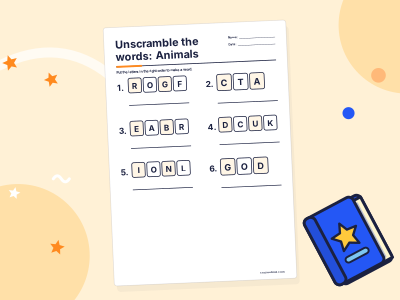
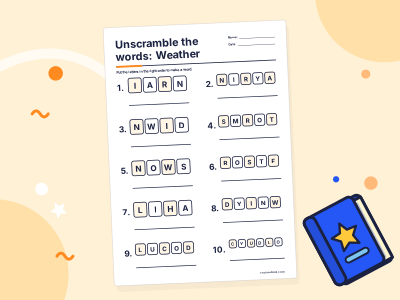
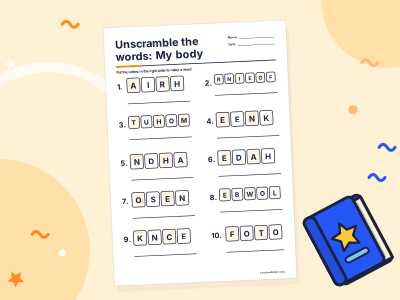
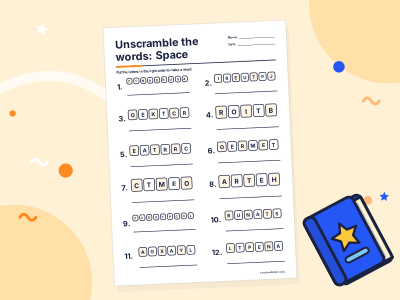
Practise it step by step in a full course: Grade 4 English
For grown-ups
Related topics

Digraphs
A digraph is two letters that make one sound, like sh in ship, ch in chip, ck in duck or ai in rain.

Homophones
Homophones are words that sound the same but have different meanings and usually different spellings, like there, their and they're, or see and sea.

Tricky words
Tricky words are common words with a part that does not follow the phonics children know yet, like the, said, was and you. Children sound out the regular part and learn the tricky bit.

Plurals
A plural means more than one. Most nouns add -s (cats) or -es (boxes), but some change in other ways, like babies, leaves, mice and children.

Prefixes
A prefix is a group of letters added to the start of a word to change its meaning, like un- in unhappy, re- in replay or dis- in disappear.

Suffixes
A suffix is a group of letters added to the end of a word to change its meaning or job, like -ful in helpful, -ness in kindness or -ed in jumped.