Science
What is an ecosystem?
Quick answer
An ecosystem is a community of living things and the non-living environment they share, such as a pond, a forest or a coral reef. All the parts depend on each other.

In one sentence
An ecosystem is a community of living things, such as plants, animals and microbes, interacting with each other and with the non-living environment around them in one place.
Explained
Think of a pond. It has plants, insects, fish, frogs and birds. It also has water, sunlight, mud and air. All these parts work together as one system, and that whole system is an ecosystem. A forest, a desert, a coral reef, a garden or even a rotting log is an ecosystem too.
 tree
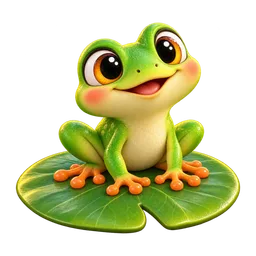 frog
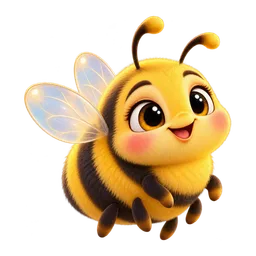 bee
Living and non-living parts
The living parts are called biotic factors: plants, animals, fungi and bacteria. The non-living parts are abiotic factors: light, water, air, temperature and soil. Abiotic factors decide which living things can survive there, so they matter just as much.
Who does what in an ecosystem?
- Producers make their own food from sunlight by photosynthesis: plants and algae.
- Consumers eat other living things. Herbivores eat plants, carnivores eat animals, and omnivores eat both.
- Decomposers, like fungi and bacteria, break down dead plants and animals and return nutrients to the soil.
Energy flows from the Sun to producers and then to consumers: see food chains. Many linked chains make a food web. Water and nutrients are recycled again and again.
Types of ecosystems
- Land ecosystems: forests, grasslands, deserts, tundra.
- Water ecosystems: ponds, rivers, lakes, oceans, coral reefs.
- Small or human-made ones: a garden, a park, a field of crops.
Why balance matters
Because the parts depend on each other, a change in one can affect many others. Sea otters eat sea urchins, and sea urchins eat kelp. Where otters were hunted almost to extinction, urchins multiplied and ate the kelp forests, and the fish that lived there lost their home. When otters returned, the kelp recovered.
People can harm ecosystems by cutting forests, polluting water and changing the climate, but we can also protect them. A habitat is the particular home of one species within a larger ecosystem.
Examples
| Ecosystem | Producers | Consumers | Decomposers |
|---|---|---|---|
| Pond | pondweed, algae | tadpoles, fish, herons | bacteria |
| Forest | trees, ferns | deer, owls, insects | fungi, worms |
| Coral reef | algae, sea grass | fish, turtles, sharks | bacteria |
| Desert | cacti, shrubs | lizards, camels, snakes | fungi, bacteria |
Common mistakes
- Counting only animals. Plants, fungi and non-living parts are also part of the system.
- Mixing up habitat and ecosystem. A habitat is where one living thing lives; an ecosystem is the whole community plus its surroundings.
- "Predators are bad for an ecosystem." They help keep numbers in balance.
Quick quiz
Ecosystems
Check what you know with 4 quick questions.
Question 1 of 4
Which of these is a non-living part of an ecosystem?
Practise it
Try it
Practise it step by step in a full course: Grade 6 Science
For grown-ups
Related topics

Food chains
A food chain shows who eats whom in nature, starting with a plant that makes its own food and following the energy as it passes from one living thing to the next.

Habitats
A habitat is the natural home of a living thing, where it finds the food, water, shelter and space it needs to survive.
Living things
Living things are organisms that grow, feed, get rid of waste, sense the world and reproduce. Plants, animals, fungi and bacteria are all alive.

Adaptation
An adaptation is a feature or behaviour that helps a living thing survive where it lives. A polar bear's thick fur and a cactus's spines are adaptations.
Amphibians
Amphibians are cold-blooded animals with thin, moist skin that live part of their lives in water and part on land. Frogs, toads, newts and salamanders are amphibians.
Birds
Birds are warm-blooded animals with feathers, wings and a beak. They lay hard-shelled eggs, and most can fly. Penguins, ostriches and parrots are all birds.