Science
What is adaptation in animals and plants?
Quick answer
An adaptation is a feature or behaviour that helps a living thing survive where it lives. A polar bear's thick fur and a cactus's spines are adaptations.


In one sentence
An adaptation is a body part or behaviour that helps a living thing survive in its habitat.
Explained
Living things must find food, stay safe and cope with their surroundings. Features that help them do that are called adaptations. There are three kinds:
- Body features (structural): a camel's wide feet that do not sink in sand, a giraffe's long neck, a bird's beak, a cactus's thick, waxy stem.
- Body processes (physiological): a camel can go for days without drinking, and some snakes make venom.
- Behaviour: birds migrate, bears hibernate, meerkats take turns to watch for danger.
 camel
 penguin
 bear
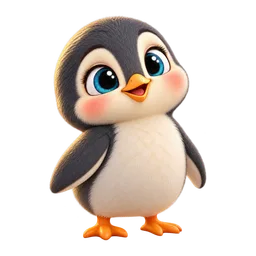
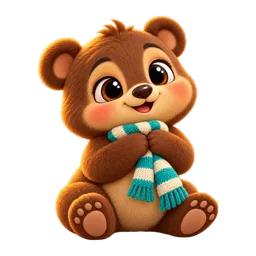
Here are some examples. A polar bear lives in the Arctic. It has thick fur, a layer of fat under its skin, and a coat that looks white and blends into the snow. A cactus in the desert has a thick stem that stores water, and spines instead of leaves to reduce water loss. A penguin has a streamlined body and wings like flippers for swimming. A chameleon changes colour to hide or to communicate.
Adaptations do not happen overnight, and an animal cannot choose to adapt. Over many generations, individuals with helpful features are more likely to survive and have young, who inherit those features. This slow process is called natural selection, a key part of evolution. A giraffe did not grow its neck by stretching. Long-necked giraffes had more food to eat, so more of them survived.
Adaptations match a particular habitat. A desert fox with huge ears would struggle in the Arctic, where a smaller ear loses less heat. When a habitat changes quickly, as with climate change, species may not adapt fast enough. See hibernation and migration for two behaviours that help animals through hard seasons.
Examples
| Living thing | Adaptation | How it helps |
|---|---|---|
| Camel | wide, flat feet | walks on sand without sinking |
| Polar bear | thick fur and fat | stays warm |
| Cactus | spines, water-storing stem | survives drought |
| Fennec fox | very large ears | loses heat in the desert |
| Owl | silent feathers | hunts without being heard |
Common mistakes
- "Animals adapt by wanting to." Adaptations build up over many generations.
- "Individual animals adapt in their lifetime." A single animal can learn, but body changes in a species take much longer.
- "Adaptations are perfect." They are just good enough for the habitat.
Quick quiz
Adaptation
Check what you know with 4 quick questions.
Question 1 of 4
Which adaptation helps a polar bear stay warm?
Practise it
Try it
Practise it step by step in a full course: Grade 6 Science
For grown-ups
Related topics
Evolution
Evolution is the way living things change over many generations. Individuals with features that help them survive tend to have more young, so those features become more common over time.

Habitats
A habitat is the natural home of a living thing, where it finds the food, water, shelter and space it needs to survive.

Living things
Living things are organisms that grow, feed, get rid of waste, sense the world and reproduce. Plants, animals, fungi and bacteria are all alive.
Hibernation and migration
Hibernation is a deep winter sleep that lets some animals save energy when food is scarce. Migration is a regular long trip to find food, warmth or a place to breed.
Mammals
Mammals are warm-blooded animals with hair or fur that feed their babies milk. Most give birth to live young. Humans, lions, whales and bats are all mammals.
Amphibians
Amphibians are cold-blooded animals with thin, moist skin that live part of their lives in water and part on land. Frogs, toads, newts and salamanders are amphibians.