Science
What is a mammal?
Quick answer
Mammals are warm-blooded animals with hair or fur that feed their babies milk. Most give birth to live young. Humans, lions, whales and bats are all mammals.

In one sentence
A mammal is a warm-blooded animal that has hair or fur, breathes air with lungs, and feeds its babies with milk.
Explained
Scientists group animals by what they have in common. Mammals share a few clear features:
- They are warm-blooded: their bodies stay at a steady temperature, whatever the weather.
- They have hair or fur, even if only a little, like a whale's whiskers.
- They breathe air through lungs.
- Mothers make milk to feed their young.
Most mammals give birth to live babies, and many look after them for a long time. A few, the platypus and the echidna, lay eggs, but the babies still drink milk. Marsupials, such as kangaroos and koalas, give birth to tiny young that grow in the mother's pouch.
 lion
 whale
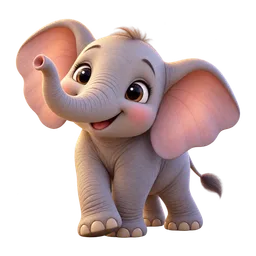 elephant
Mammals live in forests, deserts, oceans and cities. The blue whale is the largest animal ever known, and the bat is the only mammal that can truly fly. Some mammals eat plants, some eat meat, and some eat both, like us. Humans are mammals too.
There are more than 6,000 species of mammal. They belong to the larger group of animals with backbones: see vertebrates and invertebrates. Each is shaped by its home, which is called adaptation: polar bears have thick fur and fat, camels cope with heat, and moles dig.
Examples
| Animal | Why it is a mammal |
|---|---|
| Dog | has fur, feeds puppies milk |
| Dolphin | lives in water but breathes air and has milk |
| Bat | has fur and flies |
| Kangaroo | feeds its joey milk in a pouch |
| Human | has hair, lungs and feeds babies milk |
Common mistakes
- "Whales and dolphins are fish." They live in water but breathe air and feed milk, so they are mammals.
- "Mammals are never egg layers." The platypus and echidnas lay eggs.
- "Only furry animals are mammals." Some have very little hair, such as dolphins and naked mole-rats.
Quick quiz
Mammals
Check what you know with 4 quick questions.
Question 1 of 4
What do all mammal mothers do for their babies?
Practise it
Try it
Practise it step by step in a full course: Grade 3 Science
For grown-ups
Related topics

Living things
Living things are organisms that grow, feed, get rid of waste, sense the world and reproduce. Plants, animals, fungi and bacteria are all alive.

Vertebrates and invertebrates
Vertebrates are animals with a backbone, like fish, amphibians, reptiles, birds and mammals. Invertebrates have no backbone, like insects, spiders, snails, worms and jellyfish.

Adaptation
An adaptation is a feature or behaviour that helps a living thing survive where it lives. A polar bear's thick fur and a cactus's spines are adaptations.

Reptiles
Reptiles are cold-blooded animals with dry, scaly skin. Snakes, lizards, turtles, tortoises and crocodiles are reptiles, and most of them lay eggs on land.
Amphibians
Amphibians are cold-blooded animals with thin, moist skin that live part of their lives in water and part on land. Frogs, toads, newts and salamanders are amphibians.
Birds
Birds are warm-blooded animals with feathers, wings and a beak. They lay hard-shelled eggs, and most can fly. Penguins, ostriches and parrots are all birds.