Phonics and early reading
What is blending in phonics?
Quick answer
Blending means saying the sounds in a written word one after another and pushing them together to hear the whole word, like /c/ /a/ /t/ → cat.
In one sentence
Blending is reading a word by saying each of its sounds in order and merging them until you hear the word.
Explained
When a child sees the word sun, they look at each grapheme, say its sound (/s/ /u/ /n/), then run the sounds together faster and faster until the word pops out: sun. That merging step is blending. It is the core skill of phonics reading.
Two things make blending work. First, pure sounds. Stretchy sounds such as /mmm/, /sss/ and /fff/ can be held, and short sounds such as /t/, /p/ and /k/ should be clipped with no "uh" after them. Second, spotting the graphemes. In chip the child must see ch as one sound before they start, otherwise they get "c-h-i-p".
Children usually practise oral blending before they can read: a grown-up says "Can you touch your /n/ /o/ /se/?" and the child works out nose. After that comes blending printed words, often with "sound buttons" under each grapheme to tap as they go.
If a child says all the right sounds but cannot hear the word, try continuous blending: slide from one sound straight into the next without a gap, "sssuuunnn". Or blend the first two sounds, then add the last: "/s/ /u/ → su... /n/ → sun".
Examples
| Sounds | Word |
|---|---|
| /c/ /a/ /t/ | cat |
| /p/ /i/ /g/ | pig |
| /f/ /r/ /o/ /g/ | frog |
| /ch/ /i/ /p/ | chip |
| /r/ /ai/ /n/ | rain |
| /l/ /igh/ /t/ | light |
 cat
cat hen
hen bus
bus pig
pig fox
fox
Common mistakes
- Adding "uh". "Cuh-a-tuh" will not blend into cat. Model clean sounds and keep practising.
- Sounding out but then guessing. If the word that comes out does not match, say the sounds again slowly.
- Forgetting digraphs. Check for sh, ch, th, ck, ee, ai before blending. See digraphs.
- Blending words that are not decodable yet. Save words like said for tricky word practice.
Quick quiz
Blending
Check what you know with 4 quick questions.
Question 1 of 4
Blend these sounds. /h/ /e/ /n/
Practise it
Try it
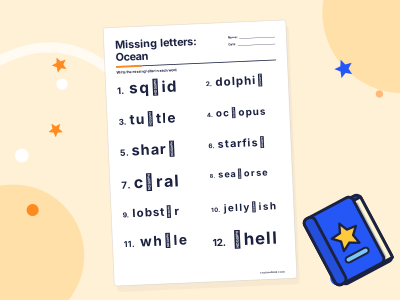
Blend, read and fill the gap
For grown-ups
Related topics
Phonics
Phonics teaches children to read and spell by linking sounds (phonemes) with the letters that write them (graphemes), then blending and segmenting those sounds.
Segmenting
Segmenting means breaking a spoken word into its separate sounds so you can spell it, like hearing dog as /d/ /o/ /g/ and writing a letter for each sound.
Digraphs
A digraph is two letters that make one sound, like sh in ship, ch in chip, ck in duck or ai in rain.
Tricky words
Tricky words are common words with a part that does not follow the phonics children know yet, like the, said, was and you. Children sound out the regular part and learn the tricky bit.
Vowels and consonants
The vowel letters are a, e, i, o and u (and sometimes y); all the other letters are consonants. Almost every English word needs a vowel sound.
Syllables
A syllable is a beat in a word, built around one vowel sound. Cat has one syllable, rab-bit has two, el-e-phant has three.