Science
How does the human body work?
Quick answer
The human body is made of trillions of cells that form organs, such as the heart, lungs and brain. Organs work together in systems that keep you moving, breathing, eating and thinking.
In one sentence
Your body is a team of organs, each doing a special job, all working together to keep you alive and healthy.
Explained
Your body is built from tiny living units called cells, around 30 trillion of them in an adult. Cells of the same type group together into tissues, such as muscle. Tissues make organs, like the heart, lungs, stomach and brain. Organs that work together form a system.
Think of your body like a busy city. The brain is the control centre, sending messages along nerves like phone lines. The heart is a pumping station, and blood vessels are the roads that deliver supplies. The lungs bring in oxygen, the digestive system is the food factory, and the skeleton is the framework holding everything up.
No organ works alone. When you run, your muscles need more oxygen, so your lungs breathe faster and your heart beats harder to deliver it. Your skin sweats to cool you down. Your brain keeps all of it in balance without you having to think about it.

Examples
| System | Main parts | Job |
|---|---|---|
| Skeletal | bones, joints | supports and protects the body |
| Muscular | muscles | moves bones and pumps the heart |
| Circulatory | heart, blood, blood vessels | carries oxygen and food around |
| Respiratory | lungs, windpipe | takes in oxygen, removes carbon dioxide |
| Digestive | mouth, stomach, intestines | breaks food down for energy |
| Nervous | brain, spinal cord, nerves | sends messages and controls the body |
Common mistakes
- "We only use 10% of our brains." This is a myth. Brain scans show activity across all of the brain, just not every part at the same moment.
- "The heart is on the left side of the chest." It sits near the middle, behind the breastbone, tilted slightly to the left.
- "Organs are only inside you." Your skin is an organ too, and it is the largest one.
Quick quiz
The human body
Check what you know with 4 quick questions.
Question 1 of 4
What is the largest organ of the human body?
Practise it
Try it
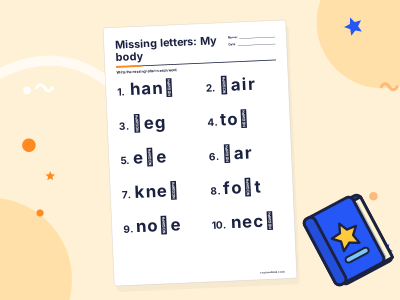
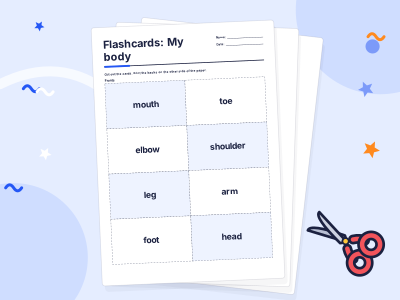
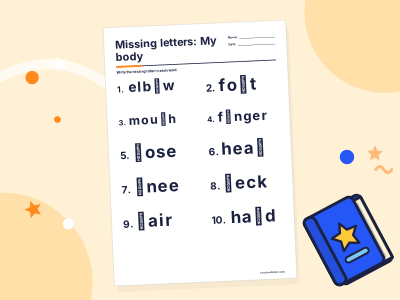
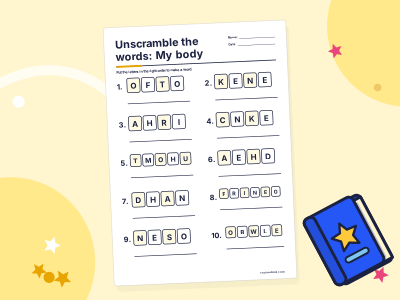
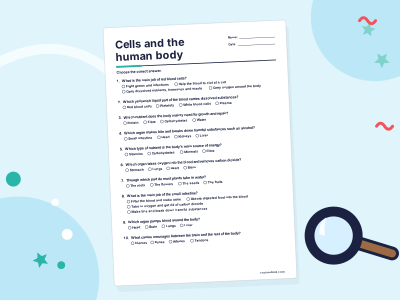
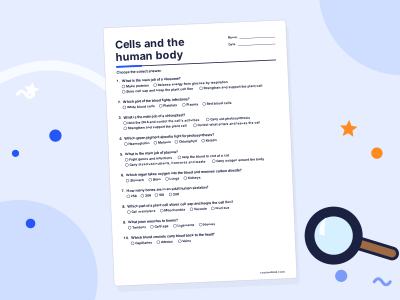
Human body activities to print
For grown-ups
Related topics
Skeleton
The skeleton is the frame of bones inside your body. It holds you up, protects soft organs like the brain and heart, and works with muscles so you can move. Adults have 206 bones.
The heart
The heart is a muscle about the size of your fist that pumps blood around your body, carrying oxygen and food to every cell and taking waste away.
Lungs
The lungs are two spongy organs in your chest that take oxygen from the air into your blood and remove carbon dioxide when you breathe out.
Digestive system
The digestive system is the long tube and organs that break food down into tiny pieces your body can absorb for energy and growth, then get rid of what is left as waste.
The senses
The five main senses are sight, hearing, smell, taste and touch. Sense organs such as the eyes, ears, nose, tongue and skin collect information and send it to your brain.
Cells
A cell is the smallest living unit. Every living thing is made of one or more cells, each with a membrane, cytoplasm and, in plants and animals, a nucleus that controls it.