Science
How does the digestive system work?
Quick answer
The digestive system is the long tube and organs that break food down into tiny pieces your body can absorb for energy and growth, then get rid of what is left as waste.
In one sentence
The digestive system breaks your food into tiny pieces so your body can use it, and gets rid of the parts it cannot use.
Explained
Food has to be broken down into very small pieces before your body can use it. Imagine trying to post a whole sandwich through a letterbox: you would have to cut it into crumbs first. Your digestive system does exactly that, in stages along one long tube from your mouth to your bottom.
- Mouth. Your teeth chop and grind food. Saliva (spit) makes it wet and starts breaking down starchy foods like bread.
- Oesophagus. When you swallow, this muscly tube squeezes food down to the stomach. It works even if you are upside down.
- Stomach. A stretchy bag that churns food with strong acid and digestive juices, turning it into a thick soup.
- Small intestine. A coiled tube several metres long. Juices from the liver and pancreas finish breaking the food down, and tiny finger-like bumps called villi absorb the nutrients into your blood.
- Large intestine. Wider but shorter. It soaks up water from what is left.
- Rectum and anus. The leftover waste, called faeces or poo, is stored and then pushed out when you go to the toilet.
The whole trip usually takes from several hours to a couple of days, depending on the person and the food.

Examples
| Food | What happens to it |
|---|---|
| Bread or rice | starch starts breaking into sugars in your mouth |
| Cheese or beans | protein is broken down mainly in the stomach and small intestine |
| Apple skin | fibre is not fully digested but helps food move along smoothly |
| A glass of water | absorbed along the way, especially in the intestines |
 mouth
mouth bread
bread apple
apple cheese
Common mistakes
- "Food goes straight from the mouth into the stomach and out." Most digestion and absorption happens in the small intestine, not the stomach.
- "Swallowed chewing gum stays inside you for seven years." It is a myth. Gum is not digested, but it passes through and leaves with other waste, though it is still best not to swallow it.
- "The windpipe and food pipe are the same tube." They are separate. A small flap called the epiglottis covers the windpipe when you swallow.
Quick quiz
Digestive system
Check what you know with 4 quick questions.
Question 1 of 4
Where does digestion begin?
Practise it
Try it
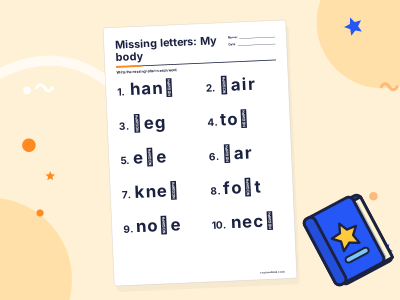
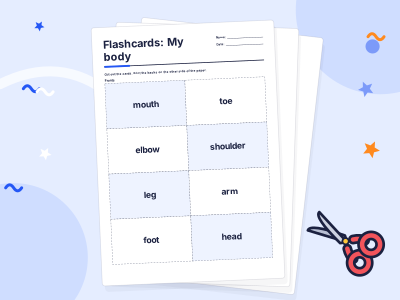
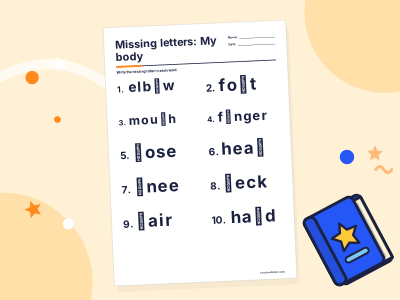
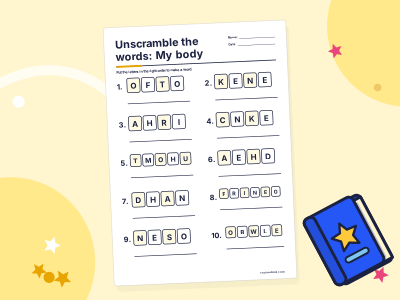
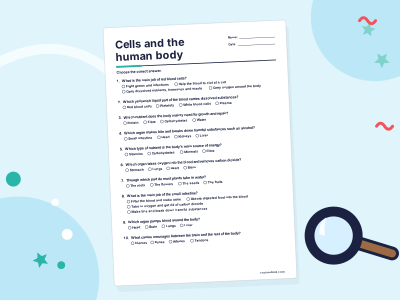
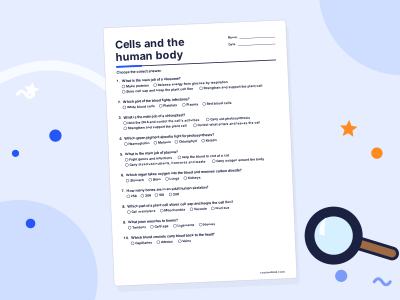
Find out how different foods give your body what it needs in healthy eating, then label a digestive system diagram.
Digestive system worksheets
For grown-ups
Related topics
Teeth
Teeth bite, tear and grind food so it can be swallowed and digested. Children have 20 baby teeth, which are replaced by up to 32 adult teeth.
Healthy eating
Healthy eating means eating a variety of foods from all the main food groups, with plenty of fruit and vegetables and water to drink, so your body gets everything it needs to grow.
The human body
The human body is made of trillions of cells that form organs, such as the heart, lungs and brain. Organs work together in systems that keep you moving, breathing, eating and thinking.
The heart
The heart is a muscle about the size of your fist that pumps blood around your body, carrying oxygen and food to every cell and taking waste away.
Lungs
The lungs are two spongy organs in your chest that take oxygen from the air into your blood and remove carbon dioxide when you breathe out.
The senses
The five main senses are sight, hearing, smell, taste and touch. Sense organs such as the eyes, ears, nose, tongue and skin collect information and send it to your brain.