Science
What do our teeth do?
Quick answer
Teeth bite, tear and grind food so it can be swallowed and digested. Children have 20 baby teeth, which are replaced by up to 32 adult teeth.
In one sentence
Teeth are hard, white tools in your mouth that cut, tear and grind food into small pieces so your body can digest it.
Explained
Eating starts with your teeth. They break food into small, soft pieces that are easy to swallow, which is the first step of the digestive system.
You have different types of teeth for different jobs, a bit like a kitchen drawer full of tools:
- Incisors at the front are flat and sharp like scissors. They cut and bite.
- Canines next to them are pointed like a fork. They tear chewy food.
- Premolars and molars at the back are wide and bumpy. They crush and grind, like a pestle and mortar.
Each tooth has a hard outer layer called enamel, the hardest material in your body. Under it is dentine, and in the middle is the soft pulp, with nerves and blood vessels. That is why a cracked tooth can hurt.
Humans get two sets of teeth. Baby teeth (milk teeth) start appearing in the first year. There are 20 of them. From around age 6, they begin to fall out and adult teeth push through. Adults can have up to 32, including four wisdom teeth at the very back, which some people never get.
Adult teeth have to last the rest of your life. Sugary foods and drinks feed bacteria in the mouth that make acid, and acid can make holes in enamel called cavities. Brushing removes the sticky layer of bacteria called plaque.

Examples
| Tooth type | Shape | Job | Food example |
|---|---|---|---|
| Incisor | flat, sharp edge | cutting | biting into an apple |
| Canine | pointed | tearing | chewy bread crust |
| Molar | wide, bumpy | grinding | chewing rice or nuts |
Common mistakes
- "Baby teeth don't matter because they fall out." They hold space for adult teeth and help with eating and speaking, so they need care too.
- "Rinse with water after brushing." Dentists usually advise spitting out the toothpaste but not rinsing, so the fluoride keeps working.
- "Brushing hard cleans better." Gentle brushing in small circles works well; scrubbing hard can harm gums.
Quick quiz
Teeth
Check what you know with 4 quick questions.
Question 1 of 4
How many baby teeth do children usually have?
Practise it
Try it
Count your teeth in a mirror and name each type, then see where food goes next in the digestive system.
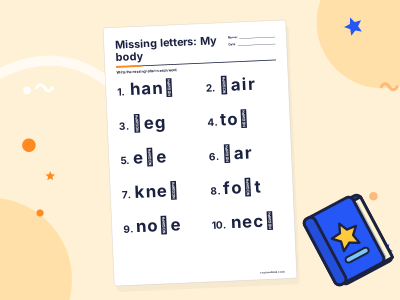
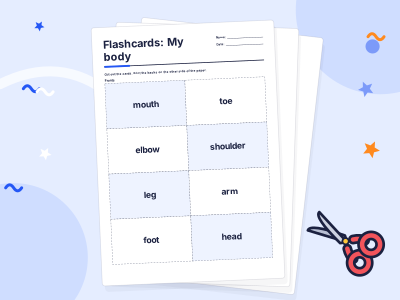
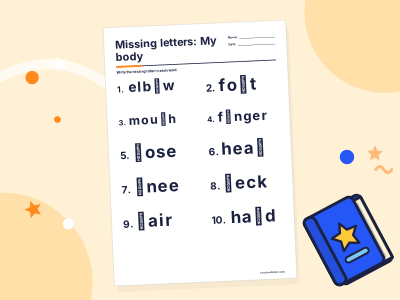
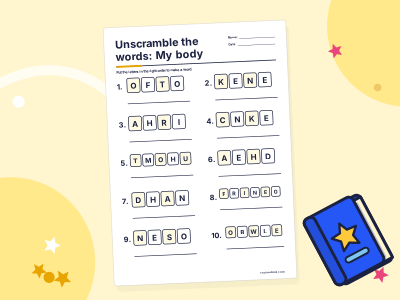
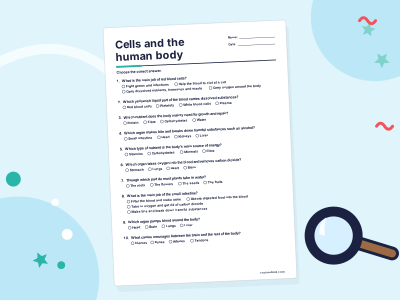
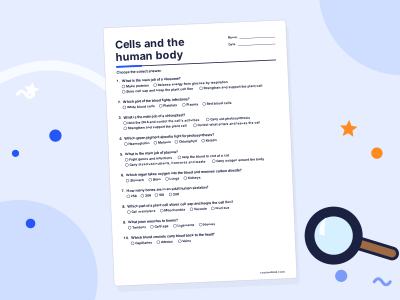
Teeth and body worksheets
For grown-ups
Related topics
Digestive system
The digestive system is the long tube and organs that break food down into tiny pieces your body can absorb for energy and growth, then get rid of what is left as waste.
The human body
The human body is made of trillions of cells that form organs, such as the heart, lungs and brain. Organs work together in systems that keep you moving, breathing, eating and thinking.
Healthy eating
Healthy eating means eating a variety of foods from all the main food groups, with plenty of fruit and vegetables and water to drink, so your body gets everything it needs to grow.
The heart
The heart is a muscle about the size of your fist that pumps blood around your body, carrying oxygen and food to every cell and taking waste away.
Lungs
The lungs are two spongy organs in your chest that take oxygen from the air into your blood and remove carbon dioxide when you breathe out.
The senses
The five main senses are sight, hearing, smell, taste and touch. Sense organs such as the eyes, ears, nose, tongue and skin collect information and send it to your brain.