Fact and opinion
A fact is something that can be checked and proved true or false. An opinion is what someone thinks or feels, and other people may disagree.
English · Ages 9–11 · 60 minutes
Children identify similes and metaphors in a text, explain the effect of a comparison on the reader, and write fresh comparisons of their own.
Generated fresh each time you press a button, and marked instantly on screen.
Finish the comparison: say the openings and let children call out endings.
"As cold as..." ice. "As busy as a..." bee. "He ran like..." the wind.
"You all knew those. Why?" We've heard them lots. "Exactly. They've been used so often they've gone stale. They're called clichés. Today we're learning what these comparisons are, why writers use them, and how to make fresh ones."
"A simile compares two different things using like or as: The fog was like a grey blanket."
"A metaphor says one thing is another, without like or as: The fog was a grey blanket."
"Neither is literally true. The fog isn't a blanket. That's what makes it figurative language. The writer wants you to see or feel something."
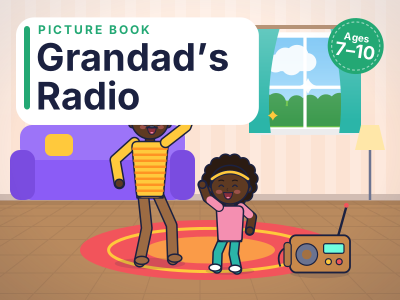
Read the opening of Grandad's Radio aloud, then display these lines:
Model the thinking for the honey simile:
"What's honey like? Sweet, smooth, golden, warm, comforting. So the singer's voice is... smooth and sweet and comforting. In six words the author tells us a lot, and makes us feel how Grandad feels."
Ask pairs to do the same for "a little city of wires". Is it a simile or a metaphor? (A metaphor: there's no like.) What does city make you picture? Lots of parts, busy, organised, too many to count.