


Science · Ages 5–7 · 50 min
Everyday materials and their properties
Children name everyday materials, describe their properties and test which materials are waterproof to choose the best one for a job.
Art · Ages 5–7 · 50 minutes
Children mix the three primary paint colours to make the secondary colours, and use what they have mixed to colour a picture of their own.
Generated fresh each time you press a button, and marked instantly on screen.
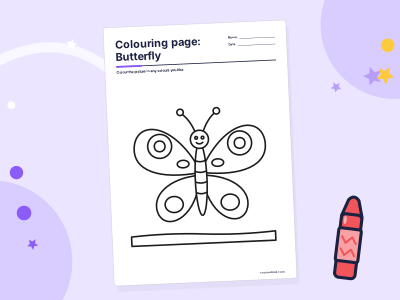
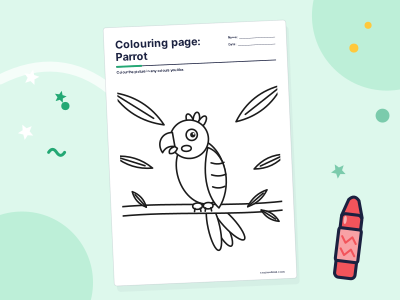
Children are usually amazed that only three colours are needed to make most of the others. In this lesson they discover the secondary colours for themselves, keep a record of what they made, and then use their own mixed colours on a butterfly or a parrot.
Show three pots: red, yellow and blue. Ask: "If I only had these three colours, could I paint a green frog? An orange? A purple flower?" Take guesses with a thumbs up or thumbs down. Then say: "Let's find out." Five minutes.
Name the colours: "Red, yellow and blue are called primary colours. You cannot make them by mixing other paints. But you can mix them to make new colours."
Model at the front, talking through every step:
Script: "Orange, green and purple are called secondary colours, because we made them from two primary colours."
Then show what happens when you add more of one: "If I add more yellow to my green, it becomes a lighter, yellower green. Adding white makes a colour paler." Ask: "What do you think happens if I mix all three together?" Try it. It turns a muddy brown. Children love this, and it explains why we wash brushes between colours.
 palette
 paintbrush
 crayon
 flower
 butterfly