Quiet Time Activities and Busy Bags for Ages 3–8: A Setup Guide
How to set up daily quiet time for 3–8 year olds after naps stop, with busy bag ideas, independent activities, rotation tips and fixes when it isn’t working.
On this page
Somewhere between three and five, most children drop their daytime nap, and the afternoon break parents relied on disappears with it. Quiet time fills that gap: a regular stretch each day when your child plays calmly on their own and everyone gets a rest. It takes a couple of weeks to set up, and it works best with the right activities on hand. This guide covers how to start, which activities and busy bags work at each age, and how to keep it going.
What quiet time is, and what it isn't
Quiet time is a predictable daily rest from noise, people and activity. Your child doesn't have to sleep or lie still. They play quietly, usually in their own room or a cosy corner, with a set of calm activities, until a timer says it's over.
It is not a punishment, and it shouldn't ever feel like one. It is also not just "go away and leave me alone", even though that is a welcome side-effect. For a child, it's a chance to recover from a busy morning, play at their own pace and practise entertaining themselves. For the adult, it's a breather. Both matter.
A sensible place for it in the day is straight after lunch, when energy naturally dips. If you're building a whole daily rhythm for a preschooler, our guide to a daily learning routine for preschoolers shows how quiet time fits in.
Setting it up
Most problems with quiet time come from starting too long and too vague. Make it short, predictable and clear.
Step by step
- Pick a placeTheir bedroom, a reading corner, or a den in the living room. It should be safe for them to be alone in, with nothing dangerous within reach.
- Prepare a basketThree or four quiet activities, chosen by you, in a basket or box that only comes out at quiet time.
- Use a visual timerYoung children can't read clocks, so use a sand timer, a timer with a shrinking colour disc, or a "traffic light" clock that changes colour when it's time to come out.
- Start smallBegin with 10 to 15 minutes. Add 5 minutes every few days as it goes well. Many families settle at 30 to 60 minutes.
- Say the same thing every dayA short, calm script (below).
- End warmlyCome in when the timer goes, notice what they did, and move on to the next part of the day.
A script for the first day, for a 3 to 5 year old:
"Now it's quiet time. Quiet time is when we rest our bodies and play calm games by ourselves. You can play with anything in this basket, look at books, or lie on your bed. You stay in your room until the light turns green. Then I'll come and get you, and you can tell me what you made."
Keep the rules short: stay in the room, use a quiet voice, play with things from the basket or the bookshelf. Then keep them the same every day. Consistency is what makes it work, far more than the activities themselves.
Busy bags for ages 3–5
A busy bag is one activity packed into its own zip bag, pencil case or small box: everything a child needs, nothing they don't. They're perfect for quiet time because each one has an obvious start and finish.
Ten that work well, using things most homes already have:
- Pipe cleaners and a colander. Poke pipe cleaners through the holes. Absorbing for 3 year olds and great for fine motor skills.
- Pom-poms and tongs. Sort pom-poms by colour into an ice-cube tray using kitchen tongs or tweezers.
- Lacing cards. Card shapes with holes punched around the edge, and a shoelace.
- Playdough kit. A small tub of dough, two cookie cutters and a plastic knife.
- Peg numbers. A paper plate with numbers 1–10 around the edge, and clothes pegs to clip on. Match pegs to numbers, or count pegs onto each.
- Felt board. A piece of felt glued inside a box lid, and felt shapes to make pictures: a house, a face, a rocket.
- Sticker scenes. A blank scene (a farm, a beach) and a sheet of matching stickers.
- Magnetic letters on a baking tray. Find the letters in their name, or sort letters with curves from letters with straight lines.
- Sock matching. Six pairs of odd socks, mixed up. Simple, oddly satisfying.
- Wipe-clean tracing. A tracing page in a plastic sleeve and a dry-wipe pen. Trace, wipe, repeat.
Many of these double as fine-motor practice. Our article on fine motor activities explains why that matters for later handwriting.

Quiet activities for ages 5–8
Older children can handle more open-ended activities and longer stretches. Their basket might include:
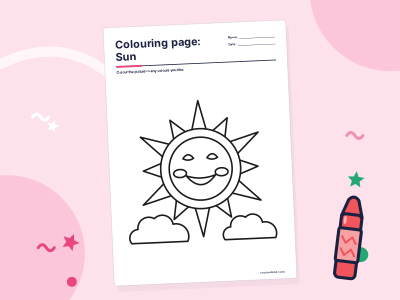
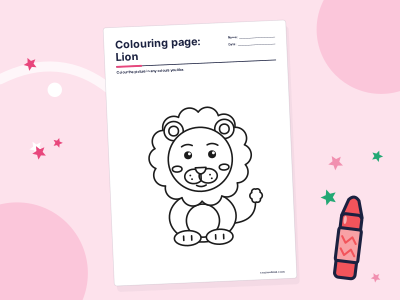
- Colouring and drawing. A small stack of colouring pages, with good crayons or pencils. Our article on the benefits of colouring explains why it's more than just filling time.
- Step-by-step drawing lessons. One guided drawing, then free drawing in the same style.
- Puzzles. Mazes, spot the difference, simple word searches or a 4 × 4 picture sudoku.
- Building. A small box of bricks with one challenge card: "Build a bridge a car can drive under."
- Books. A fresh pile of picture books or an early chapter book. Comics and non-fiction count.
- A post box. Paper, envelopes and stickers to write letters and draw cards for family members, delivered after quiet time.
- Audio stories. If you use an audio player or a smart speaker, quiet time is a great slot for a story or an audiobook. Keep it audio-only rather than a screen.
- A small-world tray. Animals, figures, a cloth for a river and some blocks.

Calm colouring pages for quiet time
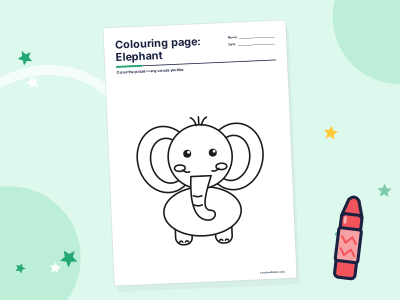
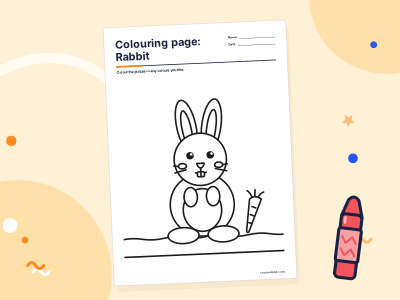
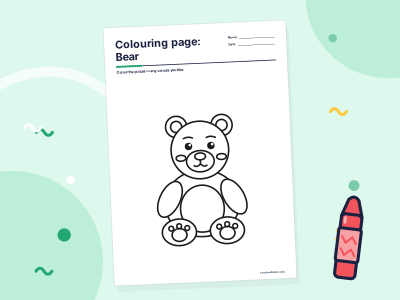
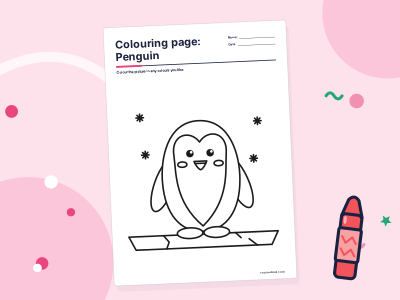
For a ready-made set of gentle puzzles for younger children, the First Puzzles pack slots straight into a quiet-time basket, and the quiet time activities collection has many more calm printables.
Rotate, don't add
The secret to keeping quiet time interesting isn't buying more things. It's hiding most of them.
Make three sets. Divide your busy bags and quiet activities into three groups: A, B and C. Use set A this week, set B next week, set C the week after. By the time set A comes back, it feels new again.
Keep four or five things in the basket at once. Too many choices and children flit between them; too few and they're bored. Four is often about right for a 4 year old.
Watch what gets ignored. If a bag hasn't been touched in two rotations, retire it for a few months or change it. Add new pom-pom colours, swap the cookie cutters, print a new set of colouring pages.
Let them choose one. From about 4, children can pick one item for their own basket. Ownership makes a big difference to whether they settle.
Swap with the seasons. Autumn leaves to sort, winter colouring, spring sticker scenes. Small changes keep it fresh with almost no effort.
| Week | Set A | Set B | Set C |
|---|---|---|---|
| Example | Pom-poms and tongs, lacing cards, a sticker scene, 3 picture books | Playdough kit, magnetic letters, colouring pages, 3 picture books | Felt board, peg numbers, a maze book, 3 picture books |
When quiet time isn't working
They come out every two minutes. The time is too long for now. Go back to 10 minutes, praise them warmly for staying, and build up again more slowly. Walk them back calmly each time without much conversation.
They're scared to be alone. Start with quiet time in the same room as you, both doing quiet activities. Then move them to their room with the door open. Then the door ajar.
They fall asleep. They probably still need some daytime sleep. Let them, but you may want to wake them after a set time so bedtime isn't pushed late.
They're bored. Rotate the basket, add one exciting new item, or make the activities a little more challenging.
They say it's babyish. For 6 to 8 year olds, call it "reading time" or "free time", let them choose more of the activities, and allow a bit more independence, such as building a den.
Siblings disturb each other. Separate spaces if possible, even just different ends of the same room with a rule about staying on your own rug.
For days when quiet time is one part of a long day indoors, our rainy day activities have ideas for the more energetic hours either side.
Your first quiet-time basket
- One busy bag (pom-poms and tongs, or lacing cards)
- One playdough or sticker activity
- Two printed colouring pages and a few crayons
- Three picture books
- A visual timer
- A cushion or blanket for a cosy spot
Pack the basket tonight, choose your timer, and try 15 minutes tomorrow straight after lunch. Then add five minutes at a time. In a couple of weeks, you'll have a calm hour you can count on.
Common questions
How long should quiet time be for a 3 year old?
Start with 10 to 15 minutes and build up slowly. Many 3 and 4 year olds can manage 30 to 45 minutes after a few weeks, and some families get to an hour.
What is a busy bag?
A small bag or box holding one self-contained activity, such as lacing cards, pom-poms and tongs, or a playdough kit. Children can take it out, use it alone and put it back.
What if my child falls asleep during quiet time?
That usually means they still need some daytime sleep. Let them nap, but keep it short or early enough that it doesn't push bedtime late. If you have concerns about your child's sleep, talk to your health visitor or doctor.
Should older children still have quiet time?
Many 6 to 8 year olds still benefit from a calm hour on weekends and holidays, especially after busy mornings. Call it reading time or free time if "quiet time" sounds babyish to them.
Printables used in this article
Crayonbird Editorial Team
Writers, illustrators and educators
We are the small team that writes, draws and tests Crayonbird’s activities. We try every idea with our own printables, keep advice practical and honest about what doesn’t work, and point to official guidance where it matters. Nothing on this blog is sponsored.
Related articles
Parenting and learning
Screen-Free Activities for Kids: Ideas by Age and Situation
Practical screen-free activities for ages 3–12, sorted by situation: waiting, quiet time, rainy days, trips and "I'm bored", plus an honest note on screens.
Ages 3–128 min read
Parenting and learning
A Realistic Daily Learning Routine for Preschoolers (15–20 Minutes)
A realistic 15–20 minute daily learning routine for 3–5 year olds at home, with a sample week plan, what to do in each block and how to keep it going.
Ages 3–58 min read
Parenting and learning
Homeschool Schedule for Beginners: Sample Days and Weeks by Age
Realistic homeschool schedules for ages 4–14, with sample days, a weekly rhythm, tips for teaching siblings, and a reminder to check the rules where you live.
Ages 4–148 min read