Crayonbird Phonics
Sound chart
Every sound and spelling in the order they are taught. Tap a card to see its keyword picture; the speaker says the keyword.
Stage 2
First sounds
New in this stepa t n s
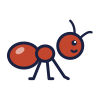
- a/æ/ant
- t/t/tent
- n/n/net
- s/s/sun


Tips for grown-ups
- a /æ/
- How to say it: Short, open /a/ as at the start of "ant" — jaw drops, no "ay".
- How to write it: Start near the top on the right, curl round to the left to make a circle, go back up and straight down.
- t /t/
- How to say it: Tongue taps behind the top teeth: a quick, whispered /t/ — not "tuh".
- How to write it: Start high, go straight down and curve a little to the right; lift the pencil and cross it.
- n /n/
- How to say it: Tongue behind the top teeth and hum through your nose: nnn. Hold it — no "nuh".
- How to write it: Start at the top, go down, back up the same line, then over the hump and down.
- s /s/
- How to say it: A long hiss, teeth together: sss. Stretch it — never "suh".
- How to write it: Start at the top right, curve back to the left, then swing the other way to finish at the bottom left.
New in this stepi p m d
- i/ɪ/igloo
- p/p/pig
- m/m/map
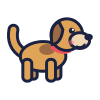
- d/d/dog


Tips for grown-ups
- i /ɪ/
- How to say it: Short /i/ as in "in" — a small smile, very short.
- How to write it: Short line straight down from the middle; lift and add a dot.
- p /p/
- How to say it: Lips together, then a tiny puff of air (feel it on your hand). Whispered — not "puh".
- How to write it: Straight down below the line, back up, then round to the right to close a circle.
- m /m/
- How to say it: Lips together and hum: mmm. Hold it.
- How to write it: Down, back up, over one hump, back up, over a second hump.
- d /d/
- How to say it: Tongue tap behind the top teeth with your voice on. Short — not "duh".
- How to write it: Curl round to the left like a, then up tall and straight back down.
New in this stepo g c k
- o/ɒ/octopus
- g/ɡ/goat
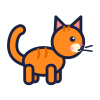
- c/k/cat
- k/k/kite



Tips for grown-ups
- o /ɒ/
- How to say it: Short /o/ as in "on" — mouth round and open.
- How to write it: Start at the top, curl round to the left and close where you started.
- g /ɡ/
- How to say it: A short voiced sound from the back of the throat — not "guh".
- How to write it: Curl round like a, then up and down below the line with a hook to the left.
- c /k/
- How to say it: Whispered /k/ from the back of the throat — short and sharp.
- How to write it: Start at the top right and curl round to the left; stop at the bottom right.
- k /k/
- How to say it: The same /k/ sound as c — a second way to write it.
- How to write it: Tall line down; lift, then a small "kick": in to the middle and out again.
New in this stepe r h b
- e/ɛ/egg
- r/r/rabbit
- h/h/hat
- b/b/bus




Tips for grown-ups
- e /ɛ/
- How to say it: Short /e/ as in "egg" — mouth a little open, quick.
- How to write it: Start in the middle, go across to the right, then up, over and round to the left.
- r /r/
- How to say it: A gentle growl: rrr. Lips slightly round — no "ruh".
- How to write it: Down, back up, and a small curve over to the right.
- h /h/
- How to say it: Just a breath, like steaming up a window: h. No voice, no "huh".
- How to write it: Tall line down, back up halfway, then over the hump and down.
- b /b/
- How to say it: Lips together, then pop with your voice on. Short — not "buh".
- How to write it: Tall line down, back up, then round to the right to make a circle at the bottom.
New in this stepu l f ck
- u/ʌ/umbrella
- l/l/lemon
- f/f/fish
- ck/k/duck




Tips for grown-ups
- u /ʌ/
- How to say it: Short /u/ as in "up" — relaxed mouth, quick.
- How to write it: Down, curve round at the bottom, up, then straight back down.
- l /l/
- How to say it: Tongue tip behind the top teeth: lll. Hold it — not "luh".
- How to write it: One tall line from top to bottom.
- f /f/
- How to say it: Top teeth on bottom lip, blow: fff.
- How to write it: Start below the top, curve over to the left and go straight down; lift and cross it.
- ck /k/
- How to say it: Two letters, one sound /k/. We use ck straight after a short vowel: duck, sock, back.
New in this stepss ff ll and s saying /z/
- ss/s/dress
- ff/f/puff
- ll/l/bell
- s/z/dogs


Tips for grown-ups
- ss /s/
- How to say it: Double s, one hissing sound. Often at the end of short words after a short vowel: kiss, mess.
- ff /f/
- How to say it: Double f, one sound /f/: off, puff, huff.
- ll /l/
- How to say it: Double l, one sound /l/: bell, doll, hill.
- s /z/
- How to say it: Sometimes s buzzes: /z/ as in "is", "his", "dogs". Try both sounds and listen for a real word.
New in this stepj v w x
- j/dʒ/jam
- v/v/van
- w/w/web
- x/ks/box




Tips for grown-ups
- j /dʒ/
- How to say it: Lips pushed forward, voice on, short: /j/ as in "jam" — not "juh".
- How to write it: Down below the line with a hook to the left; lift and add a dot.
- v /v/
- How to say it: Top teeth on bottom lip and buzz: vvv. It is f with your voice on.
- How to write it: Slant down to the bottom, then slant back up.
- w /w/
- How to say it: Lips in a tight little circle, then open — quick, no "wuh".
- How to write it: Down, up, down, up: two pointed valleys.
- x /ks/
- How to say it: One letter, two sounds: /k/ + /s/, as at the end of "box".
- How to write it: Slant from top left to bottom right; lift, then slant from top right to bottom left.
New in this stepy z zz qu
- y/j/yo-yo
- z/z/zebra
- zz/z/buzz
- qu/kw/quack


Tips for grown-ups
- y /j/
- How to say it: As at the start of "yes": tongue high, quick.
- How to write it: Short slant down to the middle; lift, then a long slant from the top right down below the line.
- z /z/
- How to say it: A buzzing bee: zzz. Hold it.
- How to write it: Across to the right, slant down to the left, across to the right.
- zz /z/
- How to say it: Double z, one sound /z/: buzz, fizz, jazz.
- qu /kw/
- How to say it: q and u work as a team: /k/ + /w/ said quickly together, as in "quick".
- How to write it: q: curl round like a, straight down below the line, then a small flick to the right; then join on u.
Stage 3
Digraphs and trigraphs
New in this stepsh ch th
- sh/ʃ/ship
- ch/tʃ/cherry
- th/θ/tooth
- th/ð/this



Tips for grown-ups
- sh /ʃ/
- How to say it: Finger on lips, lips pushed forward: shhh (the "be quiet" sound). Hold it.
- ch /tʃ/
- How to say it: A short sneeze-like /ch/ — lips forward, one quick burst.
- th /θ/
- How to say it: Tongue just peeping between the teeth, blow (no voice): th as in "thin".
- th /ð/
- How to say it: Same tongue position, voice on: th as in "this" and "that". Feel the buzz.
New in this stepng nk ai ee
- ng/ŋ/ring
- nk/ŋk/pink
- ai/eɪ/rain
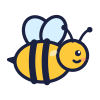
- ee/iː/bee

Tips for grown-ups
- ng /ŋ/
- How to say it: One sound at the back of the mouth, through the nose: ng as at the end of "ring". Do not add a /g/.
- nk /ŋk/
- How to say it: The ng sound followed by /k/: "pink", "bank", "think".
- ai /eɪ/
- How to say it: Long /ai/ — say the letter name A. Two letters, one sound.
- ee /iː/
- How to say it: Long /ee/ — a big smile: eee. Two letters, one sound.
New in this stepigh oa oo
- igh/aɪ/night
- oa/əʊ/boat
- oo/uː/moon
- oo/ʊ/book




Tips for grown-ups
- igh /aɪ/
- How to say it: Three letters, one sound: /igh/ — the letter name I.
- oa /əʊ/
- How to say it: Long /oa/ — the letter name O, lips round.
- oo /uː/
- How to say it: Long /oo/ as in "moon" — lips pushed out in a small circle.
- oo /ʊ/
- How to say it: Short /oo/ as in "book" and "look". Try long /oo/ first; if it is not a real word, try the short one.
New in this stepar or ur ow
- ar/ɑː/star
- or/ɔː/fork
- ur/ɜː/turtle
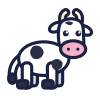
- ow/aʊ/cow



Tips for grown-ups
- ar /ɑː/
- How to say it: Long /ar/ as in "car" — open mouth, like at the doctor's ("say ah").
- or /ɔː/
- How to say it: Long /or/ as in "fork" — lips round. (Many accents do not sound the r.)
- ur /ɜː/
- How to say it: Long /ur/ as in "fur" — lips relaxed, like a little grumble.
- ow /aʊ/
- How to say it: /ow/ as in "cow" and "down" — as if you have bumped your toe: ow!
New in this stepoi air ear
- oi/ɔɪ/coin
- air/eə/chair
- ear/ɪə/ear
Tips for grown-ups
- oi /ɔɪ/
- How to say it: /oi/ as in "coin" — slide from o to ee quickly.
- air /eə/
- How to say it: Three letters, one sound /air/ as in "hair" and "fair".
- ear /ɪə/
- How to say it: Three letters, one sound /ear/ as in "near" and "hear".
New in this steper ure
- er/ɜː/fern
- er/ə/flower
- ure/jʊə/pure

Tips for grown-ups
- er /ɜː/
- How to say it: er saying /ur/ as in "her" and "fern".
- er /ə/
- How to say it: At the end of longer words er is a quick, soft /uh/ sound: "dinner", "letter", "flower".
- ure /jʊə/
- How to say it: Three letters, one sound /ure/ as in "pure" and "cure".
New in this steptch ve
- tch/tʃ/match
- ve/v/give
Tips for grown-ups
- tch /tʃ/
- How to say it: Three letters, one /ch/ sound — used straight after a short vowel: catch, fetch, itch.
- ve /v/
- How to say it: English words do not end in v, so we add an e: "give", "have", "live". The two letters make one /v/.
Stage 4
Adjacent consonants and longer words
New in this stepTwo-syllable words, y and le
- y/iː/teddy
- le/əl/apple


Tips for grown-ups
- y /iː/
- How to say it: At the end of a longer word y often says /ee/: "happy", "teddy", "sunny".
- le /əl/
- How to say it: At the end of a word le says a soft /ul/: "apple", "little", "candle".
Stage 5
Alternative spellings and pronunciations
New in this stepay ou ie ea
- ay/eɪ/play
- ou/aʊ/cloud
- ie/aɪ/pie
- ea/iː/leaf


Tips for grown-ups
- ay /eɪ/
- How to say it: Another way to spell /ai/ — usually at the END of a word: day, play, stay.
- ou /aʊ/
- How to say it: Another way to spell /ow/: "out", "loud", "cloud".
- ie /aɪ/
- How to say it: Another way to spell /igh/: "pie", "tie", "lie".
- ea /iː/
- How to say it: Another way to spell /ee/: "sea", "eat", "leaf".
New in this stepoy ir ue aw
- oy/ɔɪ/boy
- ir/ɜː/bird
- ue/uː/ or /juː/glue
- aw/ɔː/paw


Tips for grown-ups
- oy /ɔɪ/
- How to say it: Another way to spell /oi/ — usually at the end of a word: boy, toy, enjoy.
- ir /ɜː/
- How to say it: Another way to spell /ur/: "bird", "girl", "shirt".
- ue /uː/ or /juː/
- How to say it: ue says /oo/ (blue, glue) or /yoo/ (rescue, value).
- aw /ɔː/
- How to say it: Another way to spell /or/: "saw", "paw", "draw".
New in this stepwh ph ew oe
- wh/w/whale
- ph/f/phone
- ew/uː/ or /juː/chew
- oe/əʊ/toe


Tips for grown-ups
- wh /w/
- How to say it: wh says /w/ in most accents: "when", "which", "whisk".
- ph /f/
- How to say it: ph says /f/: "phone", "photo", "dolphin".
- ew /uː/ or /juː/
- How to say it: ew says /oo/ (chew, grew) or /yoo/ (few, new).
- oe /əʊ/
- How to say it: Another way to spell /oa/: "toe", "foe", "goes".
New in this stepau ey a_e e_e
- au/ɔː/sauce
- ey/iː/key
- a–e/eɪ/cake
- e–e/iː/these


Tips for grown-ups
- au /ɔː/
- How to say it: Another way to spell /or/: "haul", "launch", "August".
- ey /iː/
- How to say it: ey at the end of a word often says /ee/: "key", "donkey", "chimney".
- a–e /eɪ/
- How to say it: Split digraph: a and e work together across one consonant to say /ai/ — cap → cape. Point to a, jump over the consonant, point to e.
- e–e /iː/
- How to say it: Split digraph e…e saying /ee/: "these", "theme", "complete".
New in this stepi_e o_e u_e ore
- i–e/aɪ/kite
- o–e/əʊ/nose
- u–e/juː/ or /uː/cube
- ore/ɔː/snore
Tips for grown-ups
- i–e /aɪ/
- How to say it: Split digraph i…e saying /igh/: pin → pine, kit → kite.
- o–e /əʊ/
- How to say it: Split digraph o…e saying /oa/: hop → hope, not → note.
- u–e /juː/ or /uː/
- How to say it: Split digraph u…e saying /yoo/ (cube, tune) or /oo/ (rude, June).
- ore /ɔː/
- How to say it: Three letters, one /or/ sound: "more", "shore", "before".
New in this stepa e i o saying their names
- a/eɪ/table
- e/iː/zebra
- i/aɪ/tiger
- o/əʊ/robot


Tips for grown-ups
- a /eɪ/
- How to say it: Sometimes a says its name /ai/, often at the end of a syllable: "ta-ble", "ba-by", "pa-per".
- e /iː/
- How to say it: Sometimes e says its name /ee/: "he", "me", "we", "ze-bra".
- i /aɪ/
- How to say it: Sometimes i says its name /igh/: "ti-ger", "find", "child".
- o /əʊ/
- How to say it: Sometimes o says its name /oa/: "go", "no", "ro-bot", "cold".
New in this stepu y ow — more sounds
- u/juː/unicorn
- u/ʊ/push
- y/aɪ/fly
- ow/əʊ/snow

Tips for grown-ups
- u /juː/
- How to say it: Sometimes u says its name /yoo/: "u-ni-corn", "mu-sic", "hu-man".
- u /ʊ/
- How to say it: In many accents u says short /oo/ in "push", "pull", "put", "full".
- y /aɪ/
- How to say it: At the end of a short word y can say /igh/: "my", "fly", "sky", "try".
- ow /əʊ/
- How to say it: ow can also say /oa/: "snow", "grow", "window". Try /ow/ (cow) and /oa/ (snow) — which is a real word?
New in this stepsoft c and g, ea and ie
- c/s/rice
- g/dʒ/giraffe
- ea/ɛ/bread
- ie/iː/field



Tips for grown-ups
- c /s/
- How to say it: Before e, i or y, c usually says /s/: "ice", "city", "fancy".
- g /dʒ/
- How to say it: Before e, i or y, g often says /j/: "gem", "giant", "page".
- ea /ɛ/
- How to say it: ea can say short /e/: "head", "bread", "feather".
- ie /iː/
- How to say it: ie can say /ee/: "field", "chief", "shield".
Stage 6
Spelling patterns
New in this stepPlurals: -s and -es; ch as /k/ and /sh/
- es/ɪz/boxes
- ch/k/school
- ch/ʃ/chef

Tips for grown-ups
- es /ɪz/
- How to say it: When we add -es to make a plural it says /iz/: "boxes", "dishes", "buses".
- ch /k/
- How to say it: In some words ch says /k/: "school", "Chris", "echo".
- ch /ʃ/
- How to say it: In some words ch says /sh/: "chef", "Charlotte", "machine".
New in this stepPast tense -ed and -ing
- ed/d/rained
- ed/t/jumped
- ed/ɪd/painted
Tips for grown-ups
- ed /d/
- How to say it: Past-tense -ed can say /d/: "rained", "played", "filled".
- ed /t/
- How to say it: Past-tense -ed can say /t/: "jumped", "kicked", "wished".
- ed /ɪd/
- How to say it: After t or d, -ed says /id/: "painted", "landed", "melted".
New in this step-er and -est; are and ear
- are/eə/share
- ear/eə/pear
- ear/ɜː/learn

Tips for grown-ups
- are /eə/
- How to say it: Three letters, one /air/ sound: "care", "share", "square".
- ear /eə/
- How to say it: ear can say /air/: "bear", "pear", "wear".
- ear /ɜː/
- How to say it: ear can say /ur/: "learn", "early", "earth".
New in this step-ful and -ly; o and ou saying /u/; ou saying /oo/; -ture
- o/ʌ/monkey
- ou/ʌ/touch
- ou/uː/soup
- ture/tʃə/picture


Tips for grown-ups
- o /ʌ/
- How to say it: In some words o says short /u/: "mother", "brother", "monkey".
- ou /ʌ/
- How to say it: ou can say short /u/: "young", "touch", "double".
- ou /uː/
- How to say it: ou can say /oo/: "soup", "group", "you".
- ture /tʃə/
- How to say it: A chunk /chuh/ at the end of a word: "picture", "nature", "adventure".
New in this stepun- and re-; silent letters kn wr mb; dge
- kn/n/knee
- wr/r/wrap
- mb/m/lamb
- dge/dʒ/bridge

Tips for grown-ups
- kn /n/
- How to say it: In kn the k is silent: "knee", "knock", "know".
- wr /r/
- How to say it: In wr the w is silent: "write", "wrap", "wrong".
- mb /m/
- How to say it: In mb the b is silent: "lamb", "thumb", "climb".
- dge /dʒ/
- How to say it: Three letters, one /j/ sound, straight after a short vowel: "bridge", "badge", "hedge".
New in this step-tion; al and a saying /or/, a saying /o/
- tion/ʃən/station
- al/ɔː/walk
- a/ɔː/ball
- a/ɒ/wash

Tips for grown-ups
- tion /ʃən/
- How to say it: Four letters, one chunk /shun/ at the end of a word: "station", "action", "potion".
- al /ɔː/
- How to say it: In "walk", "talk" and "chalk", al says /or/ — the l is silent.
- a /ɔː/
- How to say it: Before ll and l, a often says /or/: "ball", "tall", "salt", "also".
- a /ɒ/
- How to say it: After w (and qu), a often says short /o/: "was", "want", "wash", "squash".