Earthquakes
An earthquake is a sudden shaking of the ground. It happens when rocks along a crack in Earth's crust, called a fault, suddenly slip past each other.
Geography · Ages 8–11 · 60 minutes
Children label the main parts of a volcano, explain that magma rises from deep inside the Earth and erupts as lava, ash and gas, and locate some well-known volcanoes on a world map.
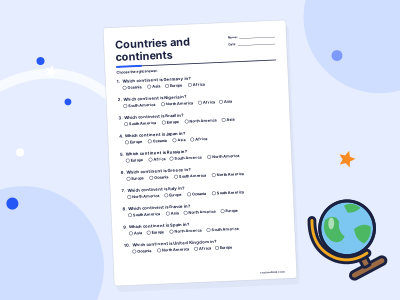
Generated fresh each time you press a button, and marked instantly on screen.
Volcanoes are dramatic, which makes them easy to get excited about and easy to misunderstand. Children often think volcanoes are mountains full of fire. This lesson explains what is really happening underground, then uses a kitchen-cupboard model so they can see how gas pushes material out of a vent.
Show a photo of a volcano erupting. Ask pairs: "What do you think is coming out of the volcano? Where does it come from?" Take three answers and write them up without correcting yet; come back to them in the plenary. Seven minutes.
Show a cross-section diagram and explain from the bottom up:
Then classify: "An active volcano has erupted recently or could erupt soon. A dormant one is sleeping but could wake up. An extinct one is not expected to erupt again."
Mark some volcanoes on the world map with sticky dots: Mount Etna (Italy), Mount Fuji (Japan), Mount St Helens (USA), Mount Cameroon (Cameroon), Krakatoa (Indonesia). Ask: "Do you notice a pattern?" Three of these lie around the edge of the Pacific Ocean, where many of the world's volcanoes are found. This area is often called the Ring of Fire.
 volcano
 mountain
 fire
fire rock
rock cloud
cloud