English
What is parallel structure in grammar, and how do you fix faulty parallelism?
Quick answer
Parallel structure means putting matching ideas in the same grammatical form, as in I like hiking, swimming and reading, not hiking, swimming and to read.



In one sentence
Parallel structure means that ideas of equal importance in a sentence are written in the same grammatical form, so they line up like train tracks.
Explained
When you list or compare things, each item should have the same shape. Nouns go with nouns, -ing words with -ing words, infinitives (to + verb) with infinitives, and whole clauses with whole clauses. This is called parallel structure or parallelism. When one item breaks the pattern, it is called faulty parallelism (or a parallelism error).
 train
 ruler
 blocks
Compare these:
- ✗ I like hiking, swimming and to read.
- ✓ I like hiking, swimming and reading.
- ✓ I like to hike, swim and read.
The first sentence is understandable, but it stumbles: the reader expects a third -ing word and gets something else. The fixed versions read smoothly, and the ideas look equally important.
Parallel structure matters in four places:
- Lists and series joined by and or or: The trip was cheap, fun and educational.
- Pairs joined by a coordinating conjunction (and, but, or, yet): She wanted to win but not to show off. The conjunction is like the equals sign in a sum: what stands on each side must match.
- Correlative pairs: both … and, either … or, neither … nor, not only … but also, whether … or. The words after the first half must match the words after the second half: She plays not only the piano but also the violin.
- Comparisons with than or as: Walking is healthier than driving.
It also matters in bullet points and headings: a list in which every point starts with a verb (Pack your bag. Charge your phone. Check the map.) is easier to follow than a mixture.
With bigger units, keep clauses parallel too: I hope that you enjoy the show and that you come back soon. If you repeat a small word such as to, that, by or the, either use it once at the start or repeat it before every item, but do not mix the two.
Parallelism is not only a grammar rule; it is also a powerful style device. Speakers and poets use it on purpose because matching patterns create rhythm and make ideas easy to compare: I came, I saw, I conquered. When it is used for effect in speeches, it is one of the main rhetorical devices.
Examples
| Faulty | Parallel | What matches |
|---|---|---|
| She is smart, funny and has kindness. | She is smart, funny and kind. | three adjectives |
| The coach told us to stretch, to drink water and that we should rest. | The coach told us to stretch, to drink water and to rest. | three infinitives |
| My aunt is a doctor, a runner and plays the cello. | My aunt is a doctor, a runner and a cellist. | three nouns |
| He spoke quickly, quietly and with nervousness. | He spoke quickly, quietly and nervously. | three adverbs |
| She not only sings but also the guitar. | She not only sings but also plays the guitar. | two verbs |
| Reading is more relaxing than to watch TV. | Reading is more relaxing than watching TV. | two -ing forms |
| Neither the bus was on time nor the train. | Neither the bus nor the train was on time. | two nouns |
Common mistakes
- Mixing -ing forms and infinitives. She enjoys painting and to draw. Fix: painting and drawing.
- Tacking a clause onto a list of words. The film was long, slow, and it was boring. Fix: long, slow and boring.
- Putting the correlative in the wrong place. He either will call you or email you. Fix: put either right before the first matching part: He will either call you or email you.
- Repeating a small word for some items only. by reading, writing and by drawing. Fix: by reading, writing and drawing or by reading, by writing and by drawing.
Parallel does not mean identical: items can be different lengths (She bought bread, a large bag of apples and cheese). They only need the same grammatical type.
Step by step
Step by step
- Find the joinersLook for and, or, but, commas in a list, correlative pairs (either … or) and comparisons (than, as).
- Mark the itemsUnderline each thing being joined or compared.
- Name each item's formNoun? Adjective? -ing word? To + verb? Clause?
- Spot the odd one outThe item with a different form breaks the pattern.
- Rewrite to matchChange the odd item (usually the shortest fix), then read the sentence aloud to check its rhythm.
Practice questions
Make it parallel
Try each one, then check your answer.
- Parallel or not? “We came, we saw, we conquered.”
Show answer
Three matching clauses: parallel. - Fix: I like swimming, hiking and to ride my bike.
Show answer
I like swimming, hiking and riding my bike. - Fix: She is smart, funny and has kindness.
Show answer
She is smart, funny and kind. - Fix: The coach told us to stretch, to drink water and that we should rest.
Show answer
The coach told us to stretch, to drink water and to rest. - Fix: He wanted to win the race and breaking the record.
Show answer
He wanted to win the race and (to) break the record. - Fix: My aunt is a doctor, a runner and plays the cello.
Show answer
My aunt is a doctor, a runner and a cellist. - Fix: The test was long, difficult, and it made us tired.
Show answer
The test was long, difficult and tiring. - Fix: He spoke quickly, quietly and with nervousness.
Show answer
He spoke quickly, quietly and nervously. - Fix: Reading a book is more relaxing than to watch TV.
Show answer
Reading a book is more relaxing than watching TV. - Fix: She not only sings but also the guitar.
Show answer
She not only sings but also plays the guitar. - Fix: You can either pay now or you can pay later.
Show answer
Match the parts after either and or: You can either pay now or pay later. - Fix: Neither the bus was on time nor the train.
Show answer
Neither the bus nor the train was on time. - Fix: The job needs patience, creativity and being good with people.
Show answer
The job needs patience, creativity and people skills. - Fix: I want a job that pays well and where I can travel.
Show answer
I want a job that pays well and that lets me travel. - Make the bullet list parallel: “Pack your bag / Charging your phone / Your passport.”
Show answer
Start each with a verb: Pack your bag / Charge your phone / Bring your passport.
Questions people ask
What is parallel structure in simple words?
It means writing matching ideas in the same way. If the first item in a list is an -ing word, the others should be -ing words too.
What is faulty parallelism?
It is a sentence where one item in a list, pair or comparison has a different grammatical form from the others, such as She likes dancing, singing and to act. It is one of the errors grammar tests most often ask you to spot.
How do you identify parallel structure?
Find words like and, or, but, either … or, not only … but also and than. Underline what they join, then check that every part is the same type: all nouns, all adjectives, all -ing forms, all infinitives or all clauses.
What is the rule of parallelism in grammar?
Items that do the same job in a sentence should have the same grammatical form. Coordinating conjunctions, correlative pairs and comparisons are the places where the rule is tested most.
Is parallel structure a rhetorical device?
Yes, when it is used on purpose for effect. Abraham Lincoln's of the people, by the people, for the people uses three parallel phrases to make his idea rhythmic and memorable.
What is parallelism in poetry?
It is the repetition of a grammatical pattern across lines, often with related meanings. Hebrew poetry in the Psalms is famous for it: The heavens declare the glory of God; and the firmament sheweth his handywork (Psalm 19:1, King James Version) says the same idea twice in matching halves.
Does parallel structure need commas?
Not necessarily. Parallelism is about matching grammatical forms, not punctuation. Whether you put a comma before the last and in a list (the Oxford comma) is a separate style choice.
Quick quiz
Parallel structure (parallelism)
Check what you know with 5 quick questions.
Question 1 of 5
Which sentence has parallel structure?
Practise it
Try it
Practise parallel structure with unlimited questions
Grammar worksheets
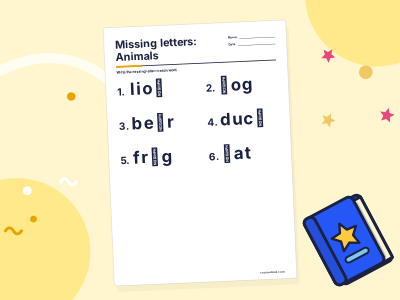
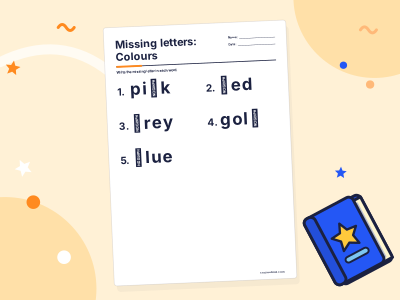
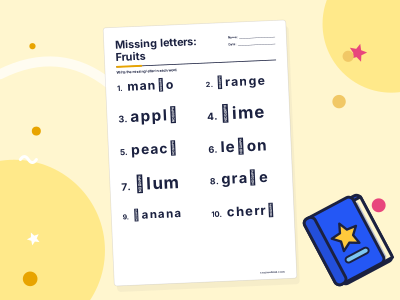
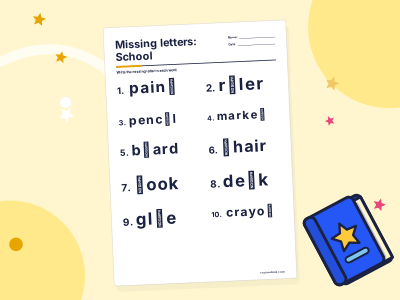
Practise it step by step in a full course: Grade 10 English
For grown-ups
Related topics

Sentences
A sentence is a group of words that makes complete sense on its own. It starts with a capital letter, ends with a full stop, question mark or exclamation mark, and usually has a verb.

Conjunctions
A conjunction is a joining word that links words, phrases or clauses, such as and, but, or, so, because, when, if and although.
Clauses
A clause is a group of words that contains a verb and usually a subject. A main clause makes sense on its own; a subordinate clause needs a main clause to complete it.

Active and passive voice
In the active voice the subject does the action (The dog chased the ball). In the passive voice the subject receives it (The ball was chased by the dog), using be + past participle.

PEEL paragraphs
A PEEL paragraph builds one argument in four steps: Point, Evidence, Explain, Link. It keeps each paragraph focused on one idea and backs that idea up.

Persuasive techniques
Persuasive techniques are tools writers, speakers and advertisers use to convince an audience, such as rhetorical questions, emotive language, facts, the rule of three and ethos, pathos and logos.