The Sea in the Desert
Kept on this device

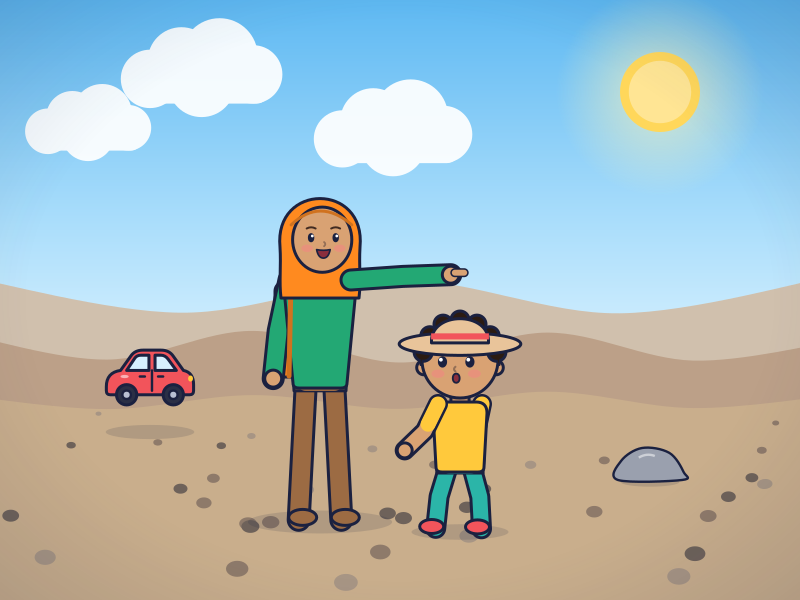
Salma had always thought the desert was the driest place on Earth. So she was very surprised when her aunt Nadia said, “Today we are going to look for sea creatures.”
Aunt Nadia was a geologist, a scientist who studies rocks. She drove Salma to the stony hills near Erfoud, in Morocco. The sun was bright, and the ground was covered in grey and brown stones.
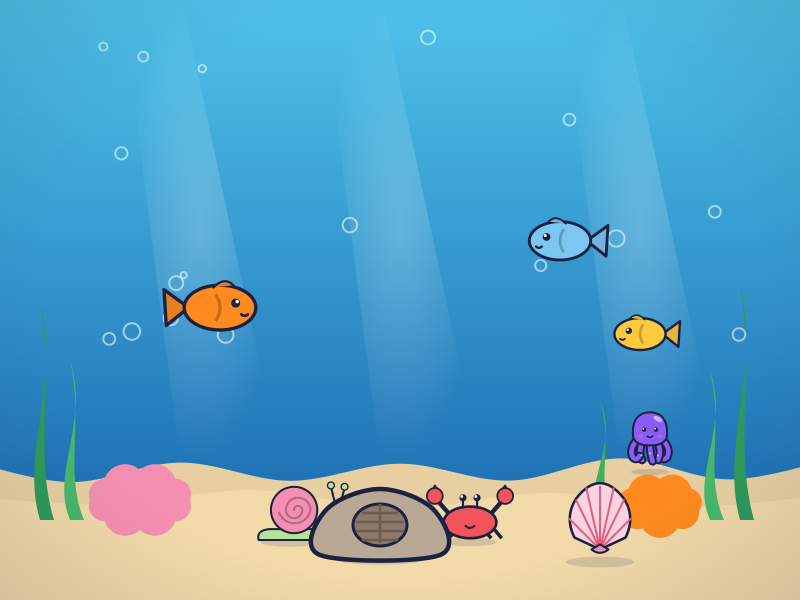
“Millions of years ago,” said Aunt Nadia, “all of this land was under a warm, shallow sea. When the sea animals died, they sank into the mud. Slowly, over a very long time, the mud turned into rock, and the shapes of the animals turned to stone. We call them fossils.”
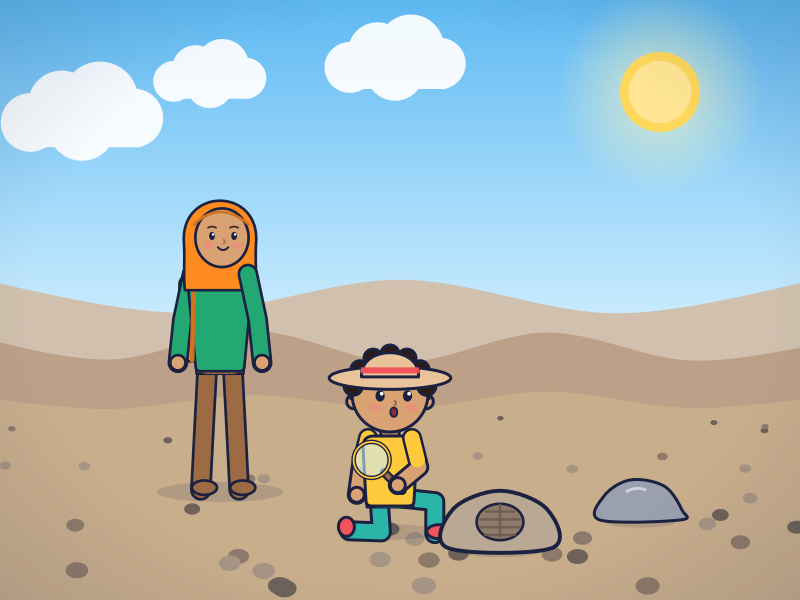
Salma knelt down and began to search. For a long time she found nothing but ordinary pebbles. Her knees hurt, and she was starting to feel hot and tired. Then she noticed a stone with tiny lines across it, like the ridges on a shell. She brushed away the dust.
It looked like a big woodlouse, with a curved head and a body made of many sections.
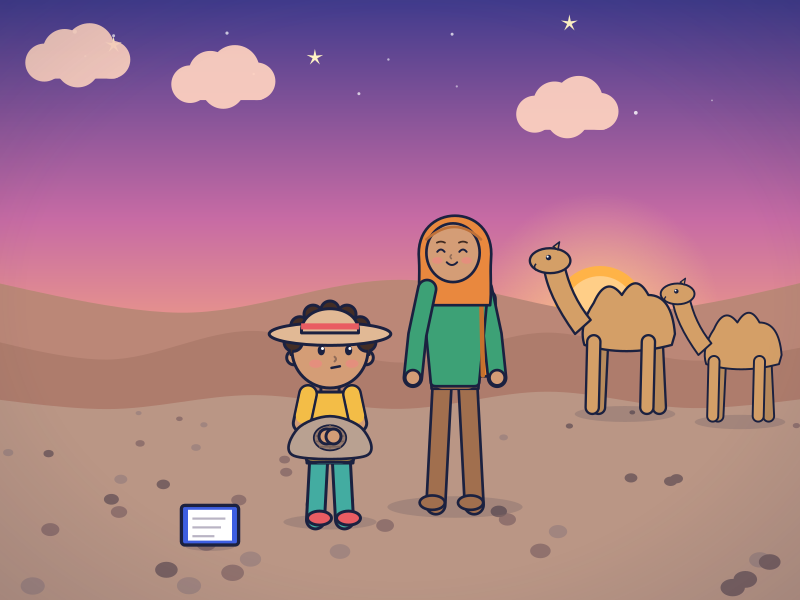
“A trilobite!” said Aunt Nadia, her eyes shining. “These creatures crawled along the sea floor long before the dinosaurs lived.”
Salma held the fossil in her palm. It was hard to imagine sea creatures swimming where camels now walked. She looked out at the hills and tried to picture the waves.
That evening, she wrote in her notebook: “Today I held something older than the dinosaurs. The desert remembers the sea.”

She put the trilobite on her bedroom shelf, right next to her magnifying glass. She had already decided what she wanted to be when she grew up.
Questions about the story
Colour in the circle next to the right answer.
- 1What does a geologist study?A RocksB WeatherC Stars
- 2What was the land like millions of years ago?A A warm, shallow seaB A thick forestC A snowy mountain
- 3What did Salma’s fossil look like?A A dinosaur toothB A big woodlouseC A fish with fins
- 4What do you think Salma wants to be when she grows up?A A camel driverB A geologistC A baker
- 5In the story, what does the word “fossil” mean?A A kind of desert plantB A tool for diggingC The shape of an ancient animal turned to stone